The evening before CYBR.HAK.CON, I had dinner with a friend I hadn't seen in nearly 30 years.
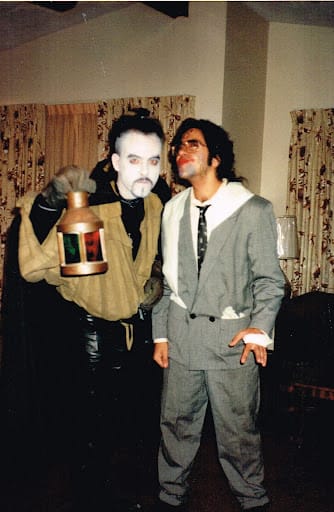
As happens when old friends reconnect, the conversation drifted back to people we grew up with. Roads we all took. Roads we missed out on or got stuck on. We quickly arrived at the best friend we had in common: Sean Marley, who we lost to suicide 30 years ago this November. Sean wasn't just a friend. He was a brother. My oldest son carries his name.
For most of those three decades, when I've thought about Sean, I've thought about the loss, confusion, depression, anxiety and addictive behavior it triggered in me, which lingered on and off for the next 12 years.
What struck me during dinner, though, wasn't the loss, but the sense of legacy and continuity.
Sean was one of the smartest people we had ever known. He was also one of the most curious.
Related:
 Bill Brenner
 Bill Brenner
 Bill Brenner
Long before the internet made information instantly available, Sean was the kind of person who would disappear down a rabbit hole trying to understand something – a scientific, spiritual and human truth. If there was a question worth asking, Sean wanted to get to the bottom of it. He was a seeker who wanted to be a repairer of the breach whenever the opportunity arose.
Somewhere between reminiscing and laughing about old stories, I remembered that my own mental health journey, which led me to advocate for mental health awareness for the cybersecurity community, began with Sean.
The questions his death left behind became questions I carried for years. In many ways, those questions became part of my current work. Today, conversations about mental health look very different than they did in 1996. Back then, more people suffered in silence. Depression was misunderstood and seeking help was often seen as weakness. The language and understanding many of us take for granted today wasn't there.
Sean missed out on a world where mental health and physical health are treated with the same urgency – as the same thing, really. He never got to see communities like ours begin recognizing that human wellbeing matters just as much as technical excellence.
Over the past several years, I've watched organizations, advocates, researchers, and practitioners push conversations forward that barely existed when Sean was alive.
Every time I write about those issues, participate in the conversations or support the cause, the work he cared about most – understanding an existential problem, seeking the truth, and helping people find a better path forward – continues.
This is a belated thank you to Sean for helping me strive for something better.
He wasn't a hacker. But he sure as hell was one of us.