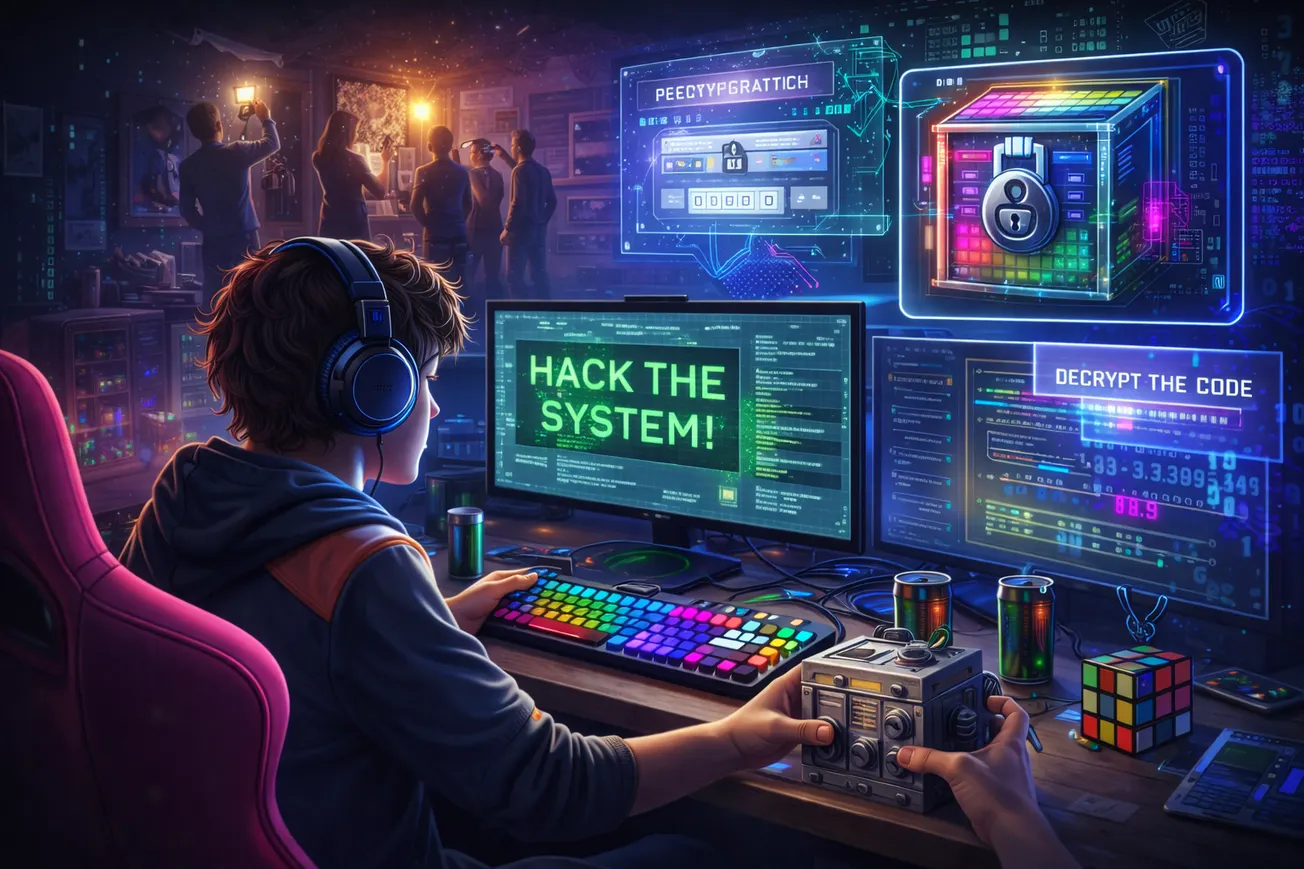
Cybersecurity has spent years trying to build training pipelines. Fergus Hay thinks we already have one. It just doesn’t look like one. It looks like kids playing games.
“Gaming is a live laboratory for skills development,” Hay says.
That statement cuts against decades of conventional wisdom. For parents, educators, and even hiring managers, gaming has long been viewed as a distraction—something to limit, not encourage.
Hear the latest episode of CYBR.HAK.CAST for more on this story:
 Bill Brenner
Related:
Bill Brenner Bill Brenner
But the data tells a different story.
There are now 3.2 billion gamers worldwide. 93% of Gen Z plays games. On average, they spend nearly two hours a day doing it.
What’s happening inside that environment maps directly to cybersecurity. Gamers learn to:
- Break down complex systems
- Identify vulnerabilities
- Test strategies
- Adapt quickly under pressure
In other words, they think like hackers.
Hay draws a direct line from gaming culture to one of the most important moments in cybersecurity history: the cracking of the Enigma code during World War II.
About The Hacking Games:

Alan Turing didn’t recruit traditional thinkers. He recruited puzzle solvers—people who could see patterns others missed. Many of them were neurodivergent. Many approached problems in unconventional ways.
That same mindset is now showing up in gaming communities. The difference is, today’s system doesn’t recognize it. Instead, it dismisses it.
Parents worry about screen time. Schools treat gaming as a distraction. Employers overlook it entirely. Meanwhile, attackers see it for what it is: a pipeline of highly trainable, highly motivated talent.
That’s where things get dangerous.
Because when young gamers go looking for challenges, communities, and recognition, they don’t always find it in legitimate spaces. In some cases, they find it in cybercriminal ecosystems instead.
Hay’s goal with The Hacking Games is to redirect that energy before it goes down the wrong path.
But the approach isn’t to replace gaming. It’s to elevate it.
Instead of saying “stop playing,” the message becomes:
- Build something in Roblox
- Create mods
- Solve puzzles
- Learn how systems actually work
And critically, do it in environments that are safe, guided, and purpose-driven.
There’s also a physical dimension to this that often gets overlooked.
In the podcast, the conversation shifts to tactile learning—escape rooms, physical puzzles, hands-on challenges. These aren’t relics of a pre-digital world. They’re complementary tools that reinforce the same cognitive skills developed in gaming.
Pattern recognition. Problem solving. Persistence.
The medium doesn’t matter. The mindset does.
And that mindset is what cybersecurity should be optimizing for.
The real takeaway isn’t that gaming is good or bad.
It’s that we’ve been measuring the wrong thing.
Instead of asking how much time kids spend gaming, we should be asking what they’re learning while they do it—and how to channel that learning into something constructive.
Because the next generation of cybersecurity talent isn’t waiting to be trained.
They’re already training themselves.
We just haven’t caught up yet.