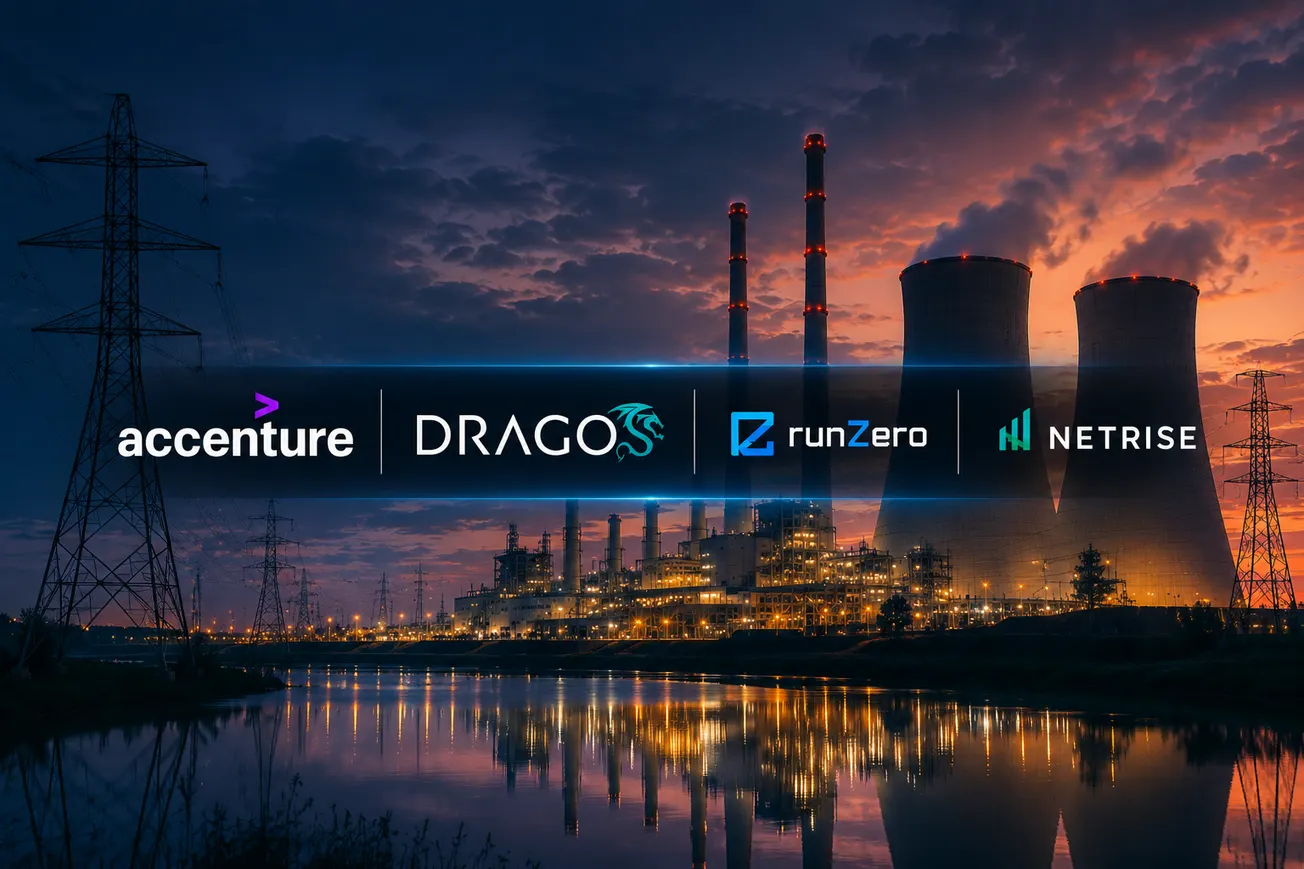
When Accenture announced plans to acquire a majority stake in Dragos and all of runZero and NetRise in a deal valued at approximately $4.175 billion, the headline was easy to read as another major cybersecurity acquisition.
The reality is far more significant.
The transaction comes as governments and critical infrastructure operators face mounting pressure to strengthen defenses against increasingly aggressive nation-state cyber campaigns. While cybersecurity spending has surged over the past decade, much of that investment has focused on traditional IT environments. The systems that generate electricity, move fuel, treat water, manufacture products, and operate transportation networks have often received far less attention.
This deal suggests that imbalance is beginning to change.
A Market Responding to a Growing Threat
The acquisition arrives amid growing concern about threats targeting operational technology (OT) and industrial control systems.
Over the past several years, U.S. intelligence agencies, federal cybersecurity officials, and private-sector researchers have repeatedly warned about Chinese state-sponsored activity targeting critical infrastructure. Campaigns attributed to groups such as Volt Typhoon have heightened concerns that adversaries are not simply gathering intelligence but potentially positioning themselves inside critical systems for future disruption.
Those warnings have exposed a difficult reality for infrastructure operators. While operational environments have become increasingly connected to enterprise networks, cloud services, and digital supply chains, security programs have often remained fragmented.
More on OT/critical infrastructure security:
 George V. Hulme
 Bill Brenner
 George V. Hulme
 Bill Brenner
Accenture highlighted that challenge directly in announcing the deal, noting that critical infrastructure operators are managing an expanding mix of interconnected systems while geopolitical tensions and AI-driven threats continue to accelerate.
The combination of Dragos, runZero, and NetRise is designed to address that complexity from multiple angles.
Dragos has built its reputation around OT visibility, threat detection, incident response, and industrial threat intelligence. runZero specializes in asset discovery and exposure management, while NetRise focuses on software supply chain and firmware security. Together, the companies provide visibility across systems, devices, software, and operational environments that have traditionally been managed through separate security programs.
More about Dragos:
 Bill Brenner
 Bill Brenner
The deal reflects a growing industry belief that critical infrastructure protection requires a more integrated approach.
Why Accenture Matters
The most consequential aspect of the transaction may not be the technology itself.
Dragos will continue operating as an independent business under the leadership of co-founder and CEO Robert M. Lee, but it will now have the backing of one of the world's largest professional services organizations.
That scale could prove significant.
For years, OT security specialists have argued that awareness of industrial cybersecurity risks has outpaced actual deployment of defenses. Many critical infrastructure operators understand the threat landscape but face challenges related to staffing, expertise, budgets, and modernization efforts.
Accenture brings decades of relationships with global enterprises, utilities, manufacturers, energy providers, and government organizations. The company's reach could help accelerate adoption of technologies and services that have historically been concentrated among more mature security programs.
Lee emphasized that opportunity in the announcement, describing the transaction as a way to help secure more critical infrastructure globally while continuing to advance the Dragos mission.
From Accenture's perspective, the deal also expands its position in a market that is rapidly evolving beyond traditional consulting and managed services. Rather than simply advising organizations on OT security, the company is now investing directly in the platforms that support those efforts.
The Broader Industry Signal
Perhaps the most important takeaway is what this transaction says about the direction of cybersecurity itself.
For much of the industry's history, security investments have largely followed data. Organizations focused on protecting customer information, financial records, intellectual property, and enterprise systems.
Today, the conversation is increasingly focused on protecting physical operations.
That shift reflects a growing understanding that disruptions to power generation, water treatment, transportation systems, manufacturing facilities, and industrial operations can create consequences far beyond data loss. In a geopolitical crisis, those systems may become strategic targets.
The acquisition of Dragos, runZero, and NetRise suggests cybersecurity leaders see that reality clearly.
Whether the combined organization succeeds in accelerating OT security adoption remains to be seen. What is clear, however, is that the market is moving toward larger, more integrated approaches to industrial cybersecurity.
This deal may ultimately be remembered less as a major acquisition and more as a marker of when the cybersecurity industry began treating critical infrastructure defense with the urgency it has long demanded.