
One of the most surprising moments during Dustin "Wirefall" Dykes' keynote at CYBR.HAK.CON had nothing to do with artificial intelligence. Instead, it started with a family story.
For years, Dykes believed he was Irish. Family stories, cultural touchpoints, and personal assumptions shaped that belief. He listened to Irish music. He embraced Irish traditions. The identity felt real because it had become part of how he perceived himself.
Then genealogy research revealed something unexpected: he wasn't Irish at all.

The revelation became the foundation for a larger discussion about perception, belief, and reality.
"Our perceptions inform our beliefs. Our beliefs create our reality," Dykes explained. "Perception is reality."
More from Dustin "Wirefall" Dykes:
 , and CYBR.SEC.Media
That idea served as the keynote's central theme and a warning about the challenges security professionals will increasingly face in an AI-powered world.
Reality Is Already a Shared Hallucination
To illustrate how easily perception can be manipulated, Dykes conducted a live experiment using miracle berries, a fruit containing a compound called miraculin. The compound temporarily alters taste perception, causing sour foods such as lemons to taste sweet.
The exercise wasn't a gimmick. It was a demonstration of a deeper truth.
Quoting neuroscientist Anil Seth, Dykes reminded attendees that humans are already constructing reality through imperfect sensory inputs and cognitive interpretation.
"We're all hallucinating all the time; when we agree about our hallucinations, we call it reality."
The point was simple but profound. Even before AI enters the picture, people frequently disagree about what they see, hear, experience, and remember. Trust has always been complicated because human perception itself is imperfect.
AI simply raises the stakes.
More from CYBR.HAK.CON:
Bill Brenner Bill Brenner
 , and CYBR.SEC.Media
Deepfakes Are Only the Beginning
When most people think about AI-enabled deception, they immediately think of deepfakes. Dykes demonstrated exactly why.
Using voice-cloning technology, he created a series of humorous recordings that appeared to feature our own Phillip Wylie saying things he would never actually say. Some recordings were genuine. Others were AI-generated. The audience was challenged to determine which was which.
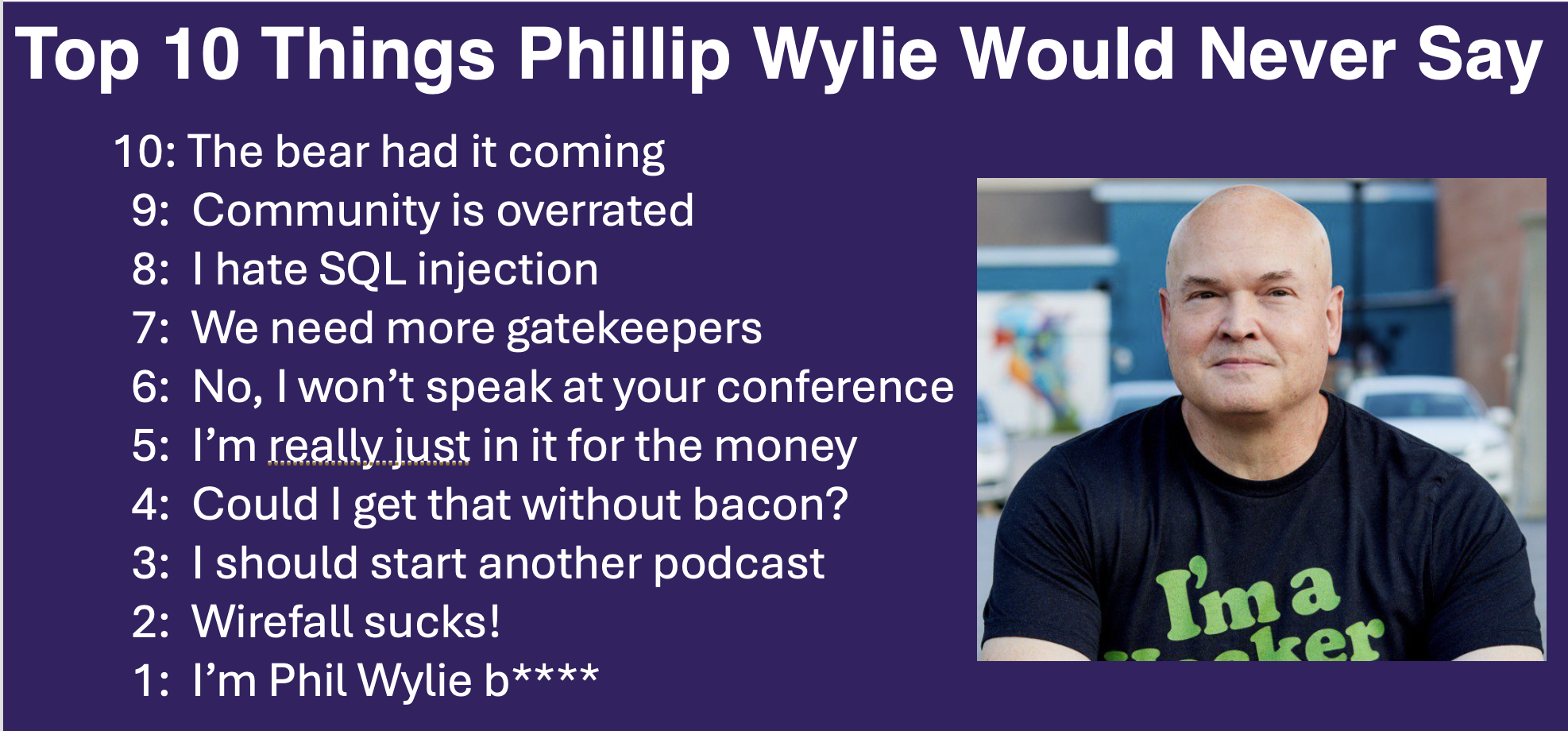
The exercise highlighted an uncomfortable reality: distinguishing authentic content from synthetic content is becoming increasingly difficult.
Voice cloning, image generation, and real-time impersonation technologies continue to improve at a remarkable pace. While defenders will develop detection capabilities, attackers will evolve their techniques as well.
Like many areas of cybersecurity, the future is likely to be an ongoing game of cat and mouse.
The more troubling question isn't whether detection systems can identify a deepfake with 98 percent accuracy, but whether people will trust those systems enough to act on their conclusions when the stakes become personal.
As Dykes noted, if a voice on the phone sounded exactly like your child asking for help, would you be willing to trust an algorithm that said it was probably fake?
Most people wouldn't.
The Bigger Threat Is the Erosion of Trust
Dykes argued that deepfakes may not be the most significant challenge AI creates.
A far larger problem is the gradual erosion of trust across digital environments.
He pointed to online manipulation techniques that already shape public discourse: astroturfing, coordinated influence campaigns, trend simulation, flooding, and large-scale content amplification.
In an environment increasingly populated by bots, synthetic content, and algorithmic manipulation, people may eventually stop trusting what they encounter online altogether.
That future worries Dykes far more than any individual deepfake. If people can no longer reliably distinguish authentic human interaction from manufactured engagement, trust itself becomes a casualty.
The Human Defense
Perhaps the keynote's most important message was that technology alone cannot solve this problem.
"Technology alone cannot solve the problems that it itself created," Dykes said. "Only human interaction can."
For cybersecurity professionals, that means investing in something often overlooked: community.
Throughout the presentation, Dykes repeatedly emphasized the importance of real-world relationships, local security groups, hacker communities, conferences, meetups, and professional networks. These environments create trust through direct human interaction rather than algorithmic mediation.
Whether through local DEF CON groups, ISSA chapters, hacker meetups, or grassroots events like CYBR.HAK.CON, Dykes argued that authentic communities provide something increasingly rare in the AI era: shared experiences that can be verified firsthand.
His call to action was straightforward:
Seek out community.
Support the groups that support you.
If the community you need doesn't exist, build it.