Have We Already Had a Cognitive Pearl Harbor?
Winn Schwartau warned of a “Digital Pearl Harbor” decades ago and is now raising a more unsettling possibility: the real attack may already be underway, targeting human perception itself.
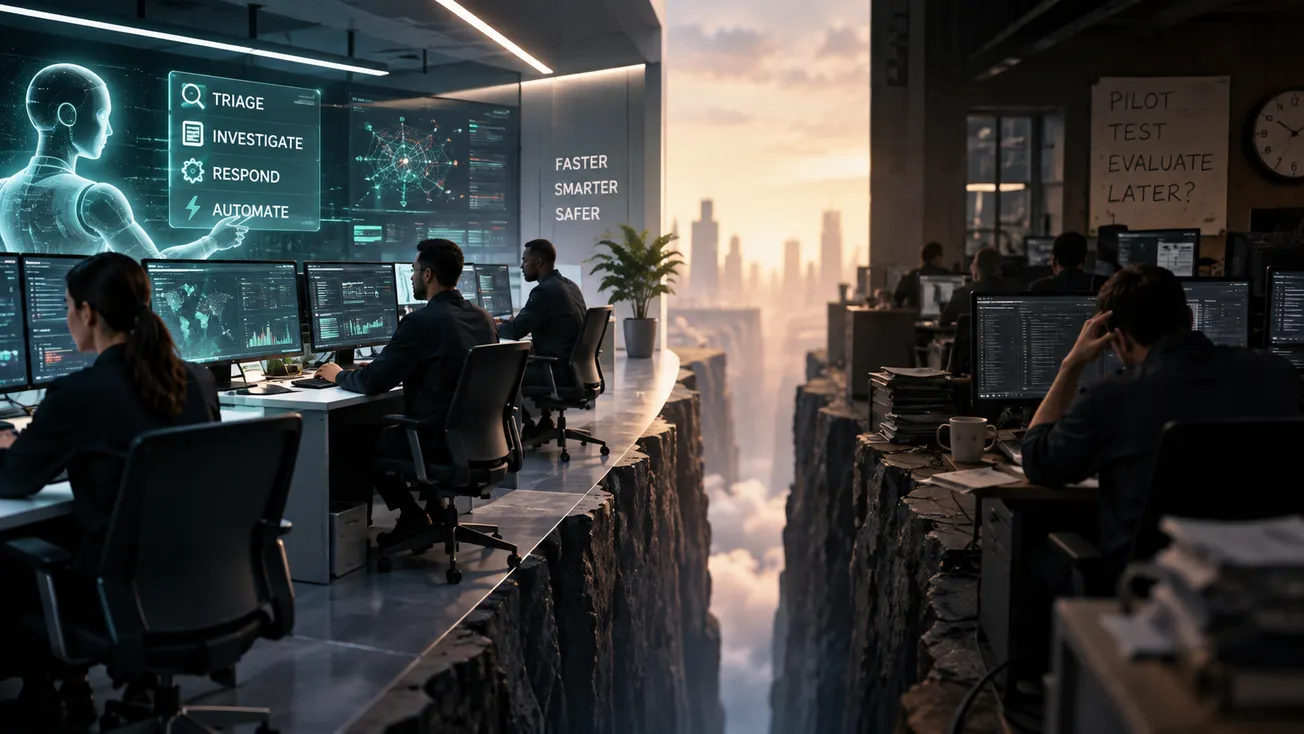
Security teams have spent years trying to reduce alert fatigue, but the real bottleneck isn’t tooling, but the human brain’s inability to process the volume of information being thrown at it.
There's an all-too-common frustration that shows up in enterprise security survey results when the gap between a security team’s intentions and its execution leaves an opening for attackers to succeed.
Executives think their teams are fixing critical vulnerabilities. Their security practitioners disagree by 42 percentage points.
Attackers compromised the Bitwarden CLI (v2026.4.0) via a GitHub Actions supply-chain attack, injecting malware that steals developer credentials. Affected organization must assume exposure, rotate secrets immediately, and audit CI/CD pipelines for compromise.
Strategic Partnership Positions Downtown Houston as a Premier Hub for Cybersecurity
An analysis of the National Vulnerability Database's shift to risk-based triage and what it actually means for the people patching systems (first of a two-part analysis)
Vercel confirmed unauthorized access to internal systems and is investigating with incident response support, and despite limited details, security teams should assume credential exposure and act immediately.
A new Dbt Labs survey of 363 data practitioners finds 72% are sprinting into AI-assisted coding while fewer than one in four invest in the pipeline controls that keep those outputs secure — and the practitioners closest to the data are more worried about it than their bosses.
Fergus Hay argues that cybersecurity isn’t facing a talent shortage: it’s failing to recognize that the next generation of hackers is already here, hiding in plain sight inside gaming culture.
From Minecraft servers to cryptographic puzzles, Fergus Hay explains why gaming is one of the most powerful—and misunderstood—training grounds for the next generation of cybersecurity talent.
The AI-driven “vulnerability storm” isn’t just a technical problem—it’s a human breaking point, and the Mythos report’s authors are right to elevate burnout from a side issue to a frontline risk.
A coalition of cybersecurity heavyweights has issued an emergency playbook for surviving the AI-driven “vulnerability storm” — and it makes clear that speed, automation, and collective defense are now existential requirements.
As AI-driven threats collapse the time to exploit, this infographic distills a rapid-response playbook from leading cybersecurity experts on how defenders must adapt fast.
IRGC-affiliated actors used legitimate engineering software to compromise American water, energy, and government systems. A new report ties the hacktivist ecosystem to Iranian intelligence, enabling them to communicate directly with Iranian intelligence.
Agentic AI will increasingly cut out humans in many management and operational decisions. These systems are designed to plan, decide, and act — continuously — without a human in every loop. Here's what that means for OT security.