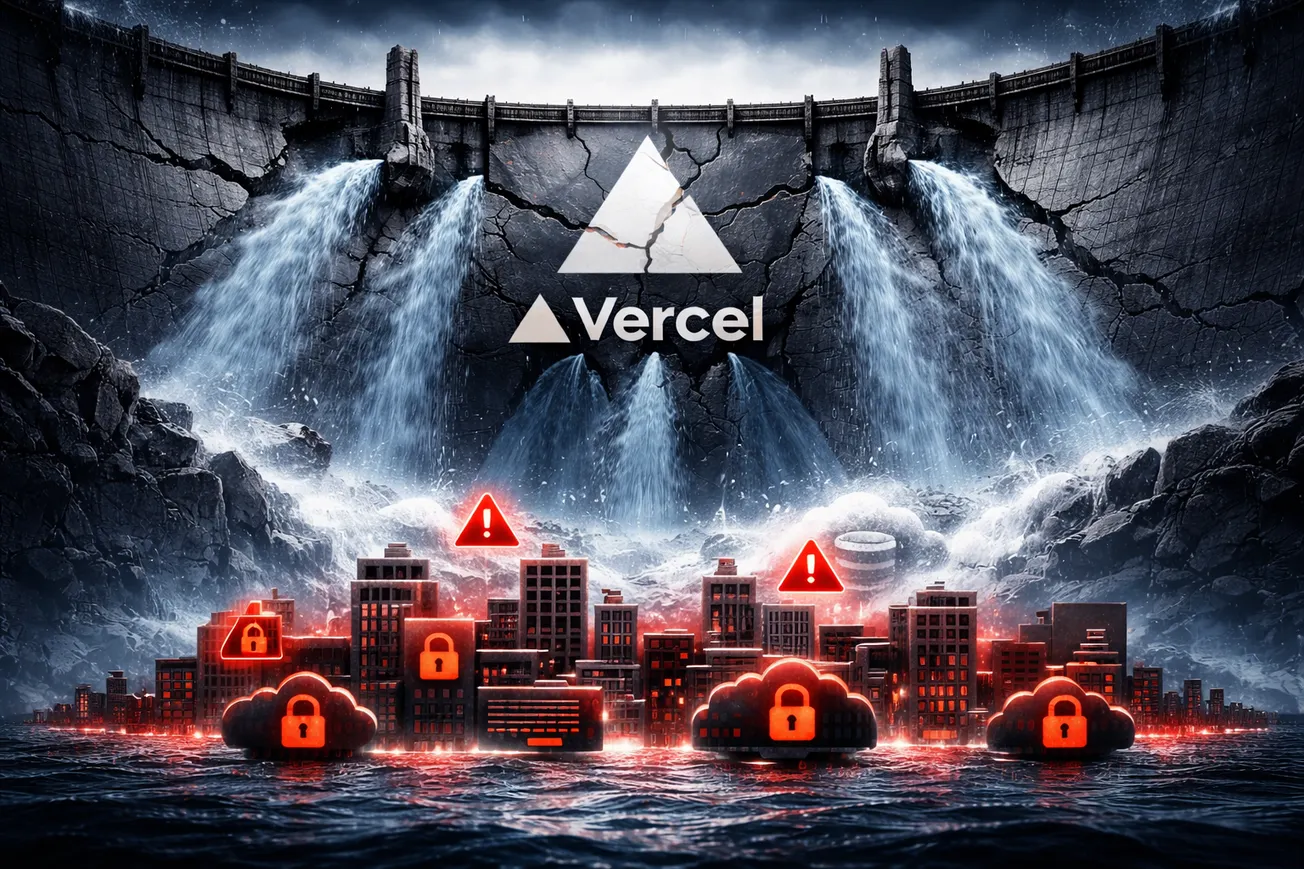
Vercel confirmed Sunday that attackers gained unauthorized access to certain internal systems, stating: “We’ve identified a security incident that involved unauthorized access to certain internal Vercel systems… We are actively investigating, and we have engaged incident response experts to help investigate and remediate.”
The company added that a “limited subset of customers” has been impacted and that it is working with those customers directly while continuing its investigation.
As reported by Dennis Fisher at Decipher, the incident is still developing, with no clear picture yet of scope, root cause, or data exposure. But given where Vercel sits in modern development pipelines, security teams don’t have the luxury of waiting.
Dennis Fisher's report:
 Dennis Fisher
“This is a call-people-into-work kind of headline,” said Matt Johansen of Vulnerable U in this YouTube short. “We don’t know the scope of it yet, but Vercel has tons of ripple effects.”
Matt Johansen's report:
What happened and why it matters
Vercel is embedded deep in application delivery workflows, often acting as the bridge between source code, infrastructure and production environments.
That means it frequently handles or has access to sensitive credentials: environment variables, API keys, and tokens tied to platforms like GitHub and Stripe.
“If you host there, you’ve got secrets, tokens, it connects to your GitHub,” Johansen said.
Even without confirmed details on what was accessed, the architecture alone raises the stakes. A breach at this layer introduces risk across every system linked through those credentials.
Vercel itself reinforced that concern in its guidance, urging customers to review environment variables and follow best practices for handling sensitive data.
More on the growing supply-chain risk:
 Bill Brenner
 Bill Brenner
What security teams should do right now
The defensive posture here is straightforward: assume exposure and move.
Start by rotating all secrets associated with Vercel. That includes:
- API keys
- Environment variables
- OAuth tokens
- Any credentials tied to CI/CD workflows.
- Tokens connected to GitHub should be treated as especially high risk.
“Rotate any environment variables, any secrets that touch that thing at all, especially GitHub tokens,” Johansen said.
Next, audit every integration connected to Vercel. Databases, backend services, and third-party platforms should all be reviewed under the assumption that credentials may have been exposed.
Security teams should also increase monitoring immediately. Watch for:
- Anomalous deployments
- Unauthorized API activity
- Configuration changes that could signal misuse of compromised credentials.
Finally, define the blast radius. Identify which applications, services, and customer-facing systems depend on Vercel. That’s critical for both containment and communication if the situation escalates.
Another supply-chain problem
Even though Vercel says only a subset of customers is directly impacted, the broader risk is systemic.
Modern development environments rely on tightly integrated services with shared trust boundaries. When a platform like Vercel is compromised, attackers don’t need to breach every organization individually, they can leverage the connections.
“This is about as serious as AWS getting hacked,” Johansen said.
The risk of waiting
Vercel’s investigation is ongoing and more details will come, but security teams should treat it as a live incident.
The company’s own guidance to review environment variables is a clear signal of where the risk lies.
The longer potentially exposed credentials remain active, the greater the chance they are used—whether for data access, lateral movement, or broader supply chain attacks.