
Cybersecurity has spent years talking about its workforce problem. Companies want more skilled people. Students and career changers want a way into the industry. Veterans need help translating existing skills into new careers. And employers routinely debate how to find, train and retain the next generation of security professionals.
CYBR.SEC.Careers is approaching the problem from another direction: If the cybersecurity industry wants a stronger talent pipeline, the people already inside the industry have to help build it.
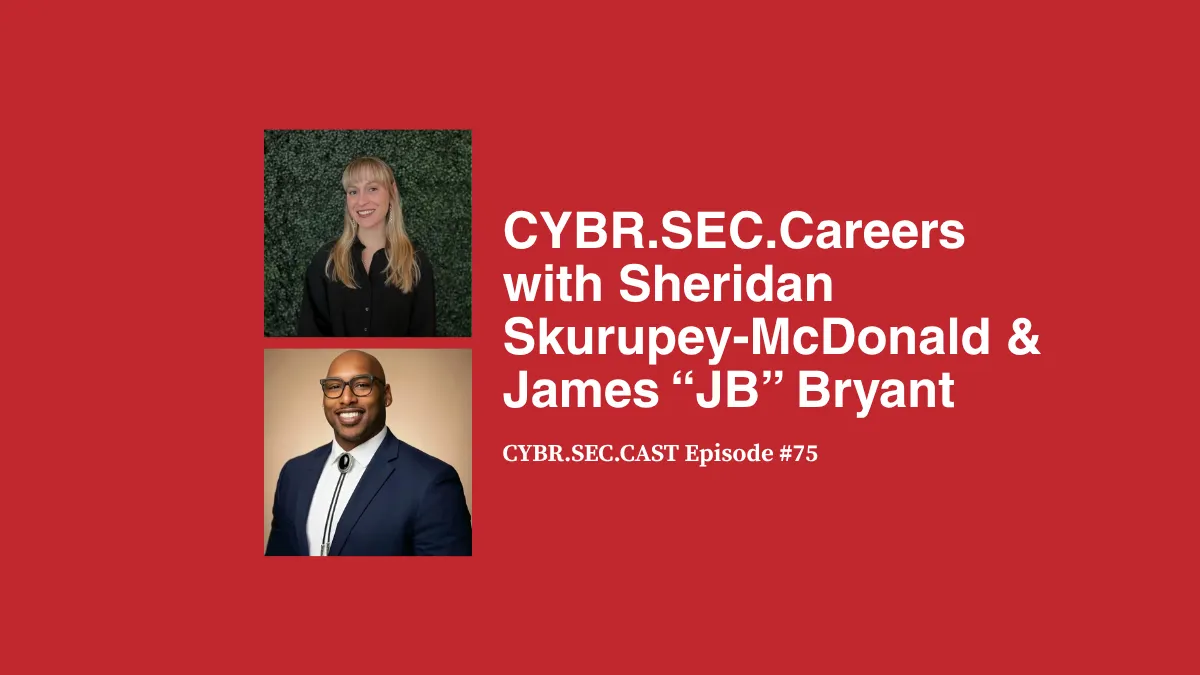
That was a recurring theme during the latest episode of CYBR.SEC.CAST, where hosts Michael Farnum and Sam Van Ryder were joined by CYBR.SEC.Careers Managing Director Sheridan Skurupey-McDonald and co-chairman James “JB” Bryant.
Full episode and related article:
 , and CYBR.SEC.Media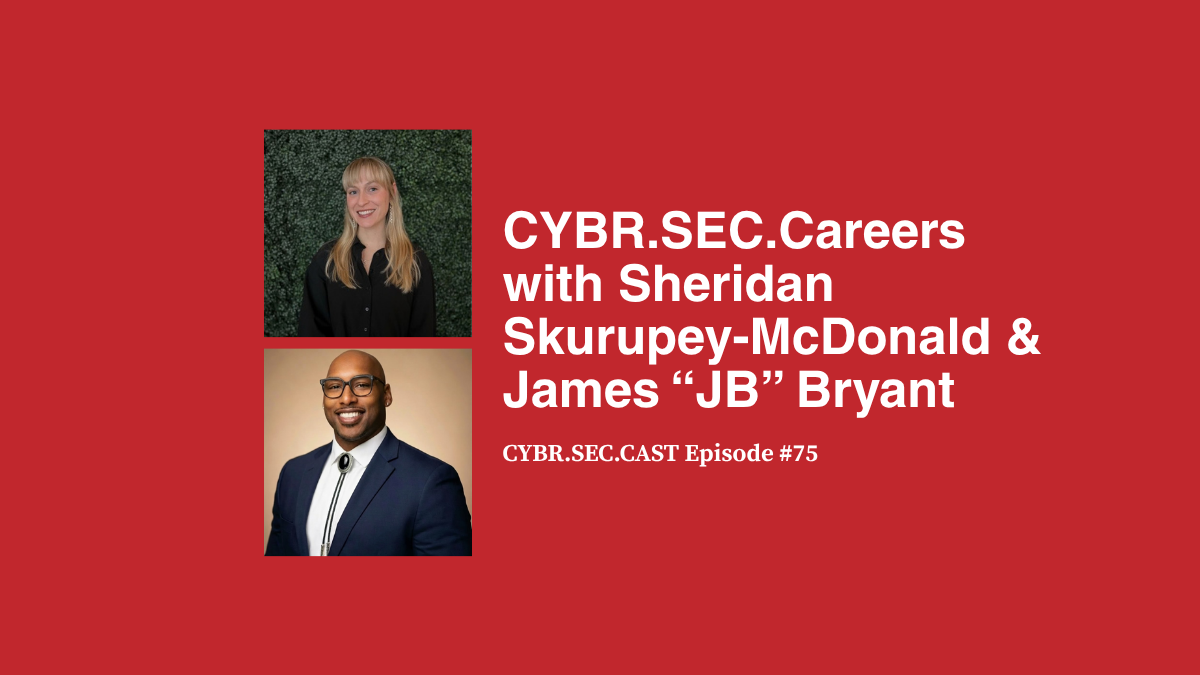
 Bill Brenner
The discussion covered scholarships, mentorship, Youth SEC.CON and other programs. But underneath all of them was a larger point: Getting more people into cybersecurity requires more than telling them that jobs exist.
They need access. They need people willing to explain the industry. And sometimes they need someone to show them that their unconventional background isn't a barrier to getting in.
Bryant knows that firsthand.
There is no single path into cybersecurity
Bryant's route into cybersecurity began about as far from the traditional technical career ladder as possible.
A lifelong athlete, he had an opportunity to pursue professional football before becoming an entrepreneur and personal trainer. He built a health and wellness organization from seven people to roughly 750 before the COVID-19 pandemic forced him to reconsider where he wanted his life and career to go.
Eventually, an opportunity in technology led him toward cybersecurity.
What helped make the industry click wasn't a certification or technical training course. It was someone willing to spend nearly two hours explaining cybersecurity in language Bryant understood: football.
The conversation mapped the cybersecurity organization from the owner of the team all the way down to the person responsible for the field.
After that, Bryant said, he was “kind of hooked.”
Today, he is a senior account manager at Access IT Group and a leader within CYBR.SEC.Careers. But he continues to define his role largely around community.
“I'm not here to sell anything, but really here to grow a community,” Bryant said, “understand what those community leaders need, make sure they're heard, make sure they're seen.”
That experience also demonstrates something CYBR.SEC.Careers wants students and aspiring security professionals to understand: Cybersecurity careers aren't necessarily linear.
Skurupey-McDonald pointed to Bryant, herself and others involved in the organization as examples of professionals who arrived where they are through very different routes.
Giving students access to those stories matters.
Access requires people willing to provide it
Youth SEC.CON gives students opportunities to meet cybersecurity professionals and colleges while learning about potential careers in the field.
CYBR.SEC.Careers covers admission and meals and can help schools pay for transportation. The goal is to reach students who may not otherwise have opportunities to visit colleges, meet recruiters or interact directly with people working in cybersecurity.
The demand is there. Skurupey-McDonald said the organization had to turn students away from this year's program.
The challenge is scaling that access.
CYBR.SEC.Careers is also supporting students through the Taylor Austin Broussard Memorial Scholarship and certification assistance while developing a structured mentorship program built around a two-year commitment.
That mentorship effort includes quarterly in-person development opportunities, resume assistance, exposure to HR professionals and guidance for people trying to navigate their way into or through the cybersecurity job market.
But those programs require something from the people who have already made it into the industry.
Time. Expertise. Connections. Mentorship. And money.
Related:
 Bill Brenner
 George V. Hulme
 , and CYBR.SEC.Media
 Bill Brenner
Companies can help build the workforce they say they need
Van Ryder specifically called on cybersecurity professionals to look inside their own companies for corporate foundations and community investment programs that could support workforce development.
He pointed to young people who had previously come through the conference community, volunteered and eventually built successful cybersecurity careers.
“We want to keep that going,” Van Ryder said.
That creates an opportunity for security companies and larger enterprises to look at cybersecurity workforce development as more than a recruiting problem.
They can help create the pool they eventually hope to hire from.
Individual practitioners can mentor, volunteer or share their experiences with students. Companies can connect nonprofit workforce programs with corporate giving programs. Others can fund scholarships, certifications or educational opportunities.
Skurupey-McDonald said CYBR.SEC.Careers is currently in an unusual position because her salary is supported through CYBR.SEC.Community rather than the nonprofit.
“Every dollar that goes to careers genuinely goes to the community,” she said.
Those dollars support scholarships, Youth SEC.CON, user groups and programs designed to bring people into the cybersecurity community.
The organization is now looking to expand its reach beyond Houston, with opportunities planned in Dallas and Waco as it heads into 2027.
For Farnum, the shift is from something that largely grew organically to a more deliberate effort.
“For the length of time this organization has been around, most of this stuff, while it's intentional, it has been organic connections and organic growth,” Farnum said. “And now we're being very intentional and very focused on this.”
Cybersecurity's workforce problem won't be solved by one nonprofit, one scholarship program or one mentor.
But the larger idea behind CYBR.SEC.Careers is considerably simpler: If the industry wants more people prepared to enter cybersecurity, the industry can't just wait for them to show up.
It has to help create the path that gets them there.