
For years, security teams have wrestled with an uncomfortable distinction: An organization can pass an audit and still be dangerously exposed. In the age of AI, that distinction is becoming harder to ignore.
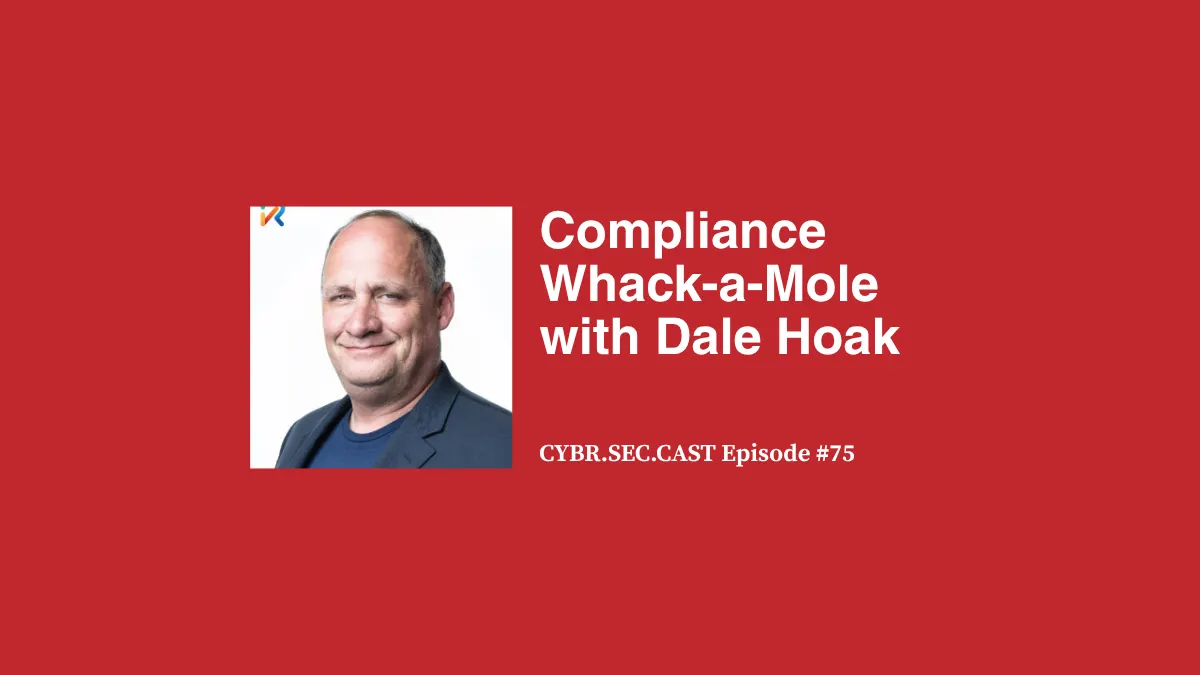
“Compliance was always meant to be a roadmap on how to be more secure,” Dale Hoak, CISO at RegScale, said during the latest episode of CYBR.SEC.CAST. “It was the start, not the finish.”
Full episode and related article:
 , and CYBR.SEC.Media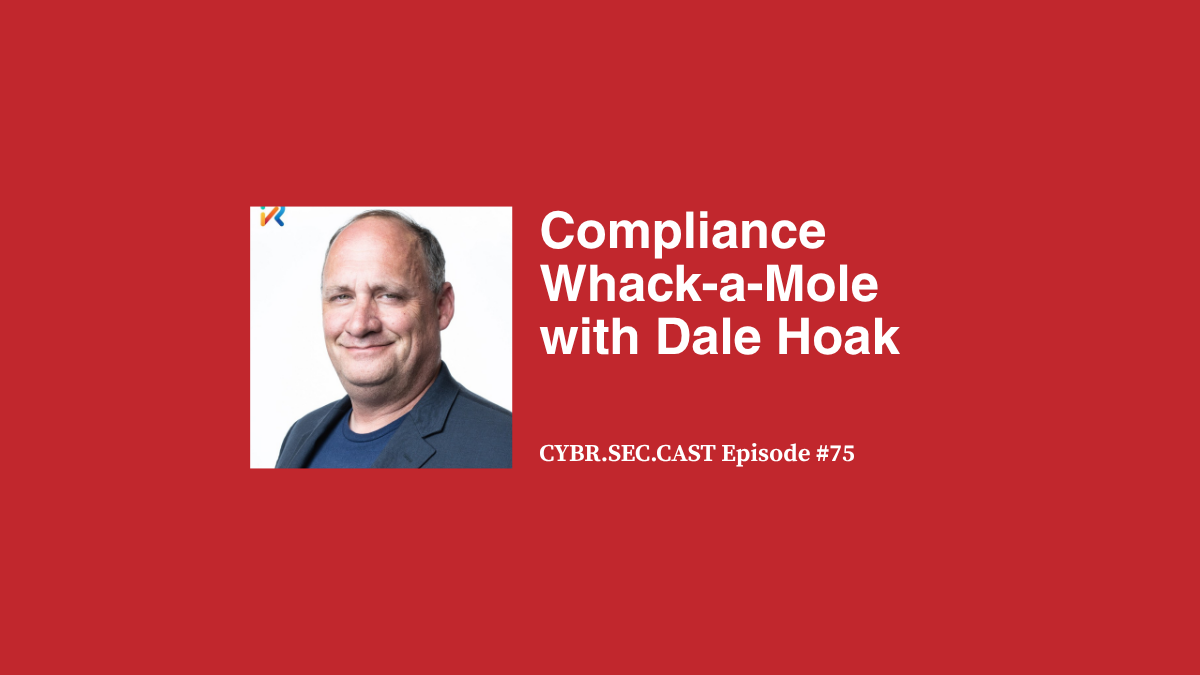
 Bill Brenner
That distinction matters because compliance frameworks move at a fundamentally different speed than attackers, technology and the businesses security teams are trying to protect.
“Compliance cannot keep up with the speed of industry,” Hoak said. “It just can't.”
Traditional compliance assessments often provide a snapshot of an organization's controls at a particular moment. Depending on the framework, that assessment might happen annually or even less frequently.
Attackers don't operate on an audit schedule. Neither does AI.
From checkbox compliance to continuous resilience
Hoak argues that organizations need to rethink what they are trying to accomplish. The goal isn't simply to demonstrate that required controls existed when an auditor looked at them. The goal is to remain resilient when something inevitably goes wrong.
That means moving toward continuous visibility into controls and risk rather than scrambling periodically to collect evidence and prepare for the next assessment. Hoak described the alternative as being ready “24/7/365.”
The distinction is between proving that a control worked and continuously understanding whether it is still working.
Compliance remains important. In many industries, organizations cannot operate without meeting regulatory and contractual requirements. But treating compliance as the end state can create a dangerous sense of completion.
“If you are in the compliance space that you are doing a snapshot-in-time type of compliance, you're way behind the power,” Hoak said.
Compliance, in his view, should provide the foundation. Cyber resilience is what organizations build on top of it.
AI is accelerating the problem
The shortcomings of that old model become more pronounced as AI changes the speed and scale of cyber activity.
Security practitioners have spent years telling organizations to “assume breach.” The emergence of AI-assisted discovery and exploitation pushes that concept further.
Organizations increasingly have to think about what happens when weaknesses are discovered and exploited faster than defenders can react. Hoak described that change in terms of blast radius.
“The day that I used to compromise one machine, that same compromise now compromises a hundred machines and it's moving horizontal before you can stop it,” he said.
The underlying security principles haven't disappeared. Organizations still need strong governance, secure configurations, risk management, visibility and controls.
The time available to compensate for weaknesses, however, is shrinking. That changes the consequences of relying on periodic assessments as a proxy for security.
Hoak said organizations must look at risk differently as AI increases the potential damage from a compromise. Security has to enter the process when products and systems are being designed and developed, rather than arriving after they have already been packaged and deployed.
“If you're not managing these things in your development pipelines all the way through to production and maintaining 24-7 visibility all the time,” he said, organizations can find themselves in trouble much faster than they once did.
Related:
 Bill Brenner
 George V. Hulme
Security can't arrive after the product
That is another weakness exposed by a compliance-first mindset. Businesses move quickly. Teams develop a product, package it, market it and sell it. Security and compliance can become later-stage requirements that have to catch up with decisions already made.
Hoak argues that the sequence needs to change. Security needs to be incorporated into development pipelines, governance and risk decisions from the beginning. Controls need to be managed continuously as systems move into production.
The threat isn't limited to an external attacker deliberately exploiting a weakness, either.
A developer can introduce something accidentally. A configuration can change. A previously effective control can stop working. New technology can alter the organization's risk profile.
A successful audit months earlier says little about whether the organization can detect and respond to those changes today. That is where the difference between compliance and resilience becomes concrete. One asks whether an organization can demonstrate that it met a requirement. The other asks whether the organization can continue operating when something breaks.
Compliance and security shouldn't be separate worlds
The shift also requires organizations to reconsider how security, risk and compliance teams work together.
During the CYBR.SEC.CAST discussion, Hoak described environments where compliance, risk and security operate in separate silos, sometimes with different priorities and limited communication.
That structure makes continuous resilience harder.
Compliance requirements can provide a common foundation, but organizations need security operations, risk management, engineering and governance working against the same understanding of the organization's risk. That becomes especially important as the threat environment accelerates.
The answer isn't abandoning compliance. Organizations still have regulatory obligations, contractual requirements and frameworks they must satisfy. The mistake is confusing satisfying those requirements with being secure.
Compliance tells an organization whether it has met a defined standard. Resilience asks a more difficult question: What happens when the controls fail anyway?
In an environment where vulnerabilities can be discovered faster, exploitation can move faster and compromises can spread farther, that may be the question security leaders need to spend more time answering.
The audit may tell you what was true yesterday. Cyber resilience has to tell you what is happening now.