

Cybersecurity programs rarely fail because of one catastrophic decision. More often, leaders fall into familiar traps that gradually pull their teams away from their larger objectives.
Wil Klusovsky has seen those mistakes repeat themselves throughout nearly three decades in the industry.
Klusovsky, chief revenue officer at viLogics, will examine some of the most persistent of them during his CYBR.SEC.CON. 2026 session, “The Four Horsemen of Cybersecurity Failure: How to Spot Them, Fight Them, and Keep Your Security Program From Becoming a Side Quest.”
Full coverage of CYBR.SEC.CON.:
 Bill Brenner
Appearing on the latest episode of CYBR.SEC.CAST with hosts Michael Farnum and Sam Van Ryder, Klusovsky said the session draws on problems he has repeatedly encountered during 26-plus years working in cybersecurity, much of it in consulting and managed services.
Full episode:
 , and CYBR.SEC.Media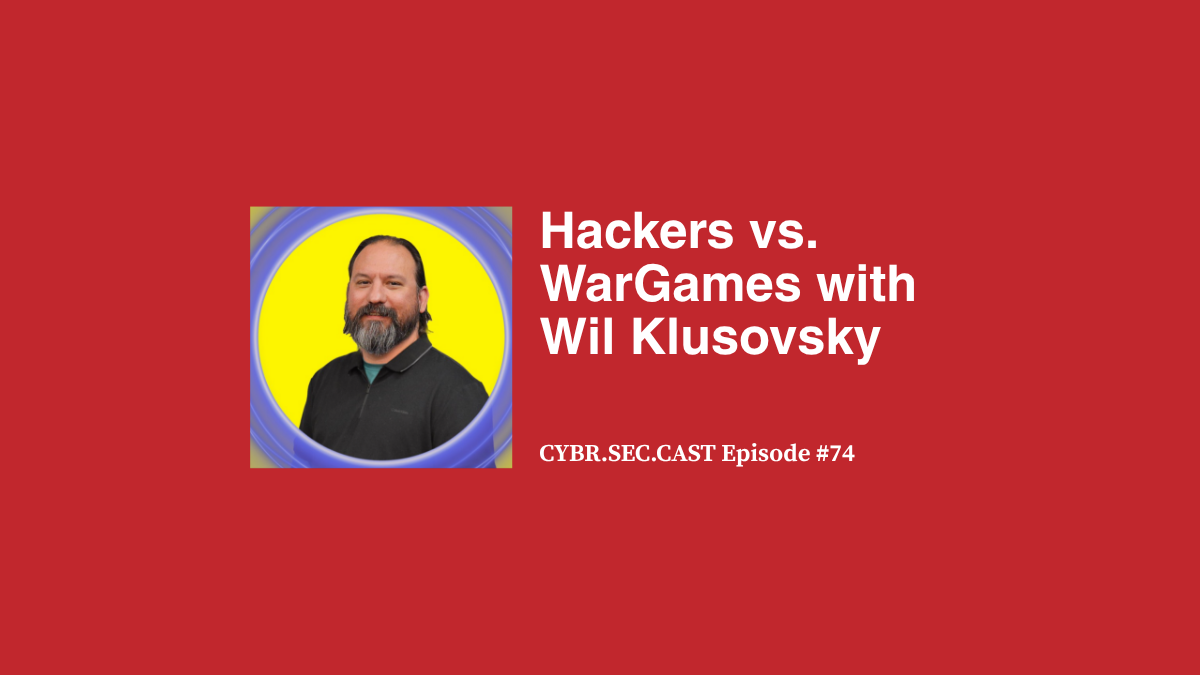
“These are things that I've seen in my 26 years repeatedly,” Klusovsky said. “These are really big common pitfalls that a lot of us, myself included in my early days, we all fall into at some point.”
His goal is not simply to identify those mistakes. The session will focus on recognizing them before they become serious problems and preventing them from distracting organizations from the security program they are actually trying to build.
That includes knowing when to push back against requests from executives, boards and other parts of the business.
Klusovsky said security leaders need to be able to explain, in effect, that they understand what someone wants to accomplish while also articulating why it may not be the right priority yet. The larger challenge is maintaining a view of the entire program rather than allowing individual problems or demands to become “side quests” that consume attention and resources.
From problem solver to big-picture security
Klusovsky's perspective comes in part from a career that has required him to move across different areas of cybersecurity rather than specialize deeply in one.
His path began in the Marine Corps, where his technical aptitude eventually put him in roles involving technology. He remembers encountering technologies such as Snort and the emerging discipline then commonly called information assurance. What began as an interesting technical field became a career that has now stretched across more than 26 years.
Most of that career has been spent on the consulting and managed-services side. Klusovsky has also served as a CISO, but said he ultimately discovered that he enjoyed diagnosing and fixing problems more than managing them over the long term.
That experience forced him to develop what he describes as a broad CISO mindset.
One day the problem might involve penetration testing, another security monitoring and another compliance. Klusovsky said that meant learning enough about many disciplines to understand the people doing the work and how the individual pieces fit into the larger security program.
That broader perspective eventually pulled him toward business issues, governance and program building — subjects that can be critical to cybersecurity leadership but difficult to make compelling on a conference stage.
Klusovsky's solution has been storytelling.
Making security program management less dry
Before joining the Marine Corps, Klusovsky studied creative writing. He has written a book and is working on another, and that background now influences how he approaches cybersecurity presentations.
Rather than simply presenting a list of mistakes security leaders should avoid, he builds talks around stories, themes and pop-culture references designed to make the underlying lessons easier to absorb.
For “The Four Horsemen of Cybersecurity Failure,” he deliberately leaned into that approach after learning that CYBR.SEC.CON. welcomed a less formal presentation style.
“I try to do all of my presentations with some kind of storytelling mechanism and keep the audience engaged,” he said.
It's an approach Klusovsky has used before. An earlier presentation reframed security leadership around the idea of leading like a military general. Another cloud security presentation turned the subject into a quest in which attendees encountered and fought different monsters.
His references can range from Dungeons & Dragons and Metallica to “Lord of the Rings,” “Star Wars” and Jason Bourne.
The pop culture isn't there simply for entertainment. Klusovsky argues that subjects such as governance, program building and security management are important but can be difficult for audiences to absorb when presented as dry management material.
“If he can make it interesting, the Four Horsemen, we all know the Four Horsemen of the Apocalypse, are they bringing about doom?” Klusovsky said of the concept. “I feel like that brings a certain kind of weight with it. And hopefully that resonates.”
Cybersecurity careers require breadth and curiosity
The conversation also moved beyond Klusovsky's conference session to his “Keyboard Samurai” podcast and his advice for people trying to build careers in cybersecurity.
Klusovsky launched the podcast after appearing frequently on other shows and wanting a platform of his own. Episodes cover a broad range of cybersecurity, technology and AI subjects, with an emphasis on giving guests room to explain their expertise and giving listeners something useful to take away.
That same interest in learning across disciplines shapes his career advice.
For professionals trying to enter cybersecurity, Klusovsky recommends first understanding what they actually want to do. Cybersecurity is a broad industry, and penetration testing, SOC work, GRC and firewall engineering require different skills and lead to different careers.
At the same time, newcomers need to remain flexible.
“Know what you want, but also be open to doing anything because your first gig is probably not going to be the thing you want to do,” Klusovsky said.
For security leaders already running programs, he offered another piece of advice that ties directly back to his upcoming talk: ask for help.
Organizations often wait until a problem has become a crisis before seeking outside expertise, Klusovsky said. In many cases, getting another perspective months earlier could prevent the problem from escalating.
“You don't have to do it all on your own,” he said. “That's probably one of the biggest, quickest paths to failure that I've seen.”
It is a fitting preview of the argument Klusovsky will bring to Houston: cybersecurity leaders have no shortage of immediate problems competing for their attention. The harder job is recognizing which ones threaten the larger mission — and making sure the security program doesn't become a collection of side quests.
CYBR.SEC.CON. 2026 takes place Sept. 15-16 at the George R. Brown Convention Center in Houston.