In cybersecurity, the biggest investment opportunities sometimes emerge where the venture capital industry sees no market at all.
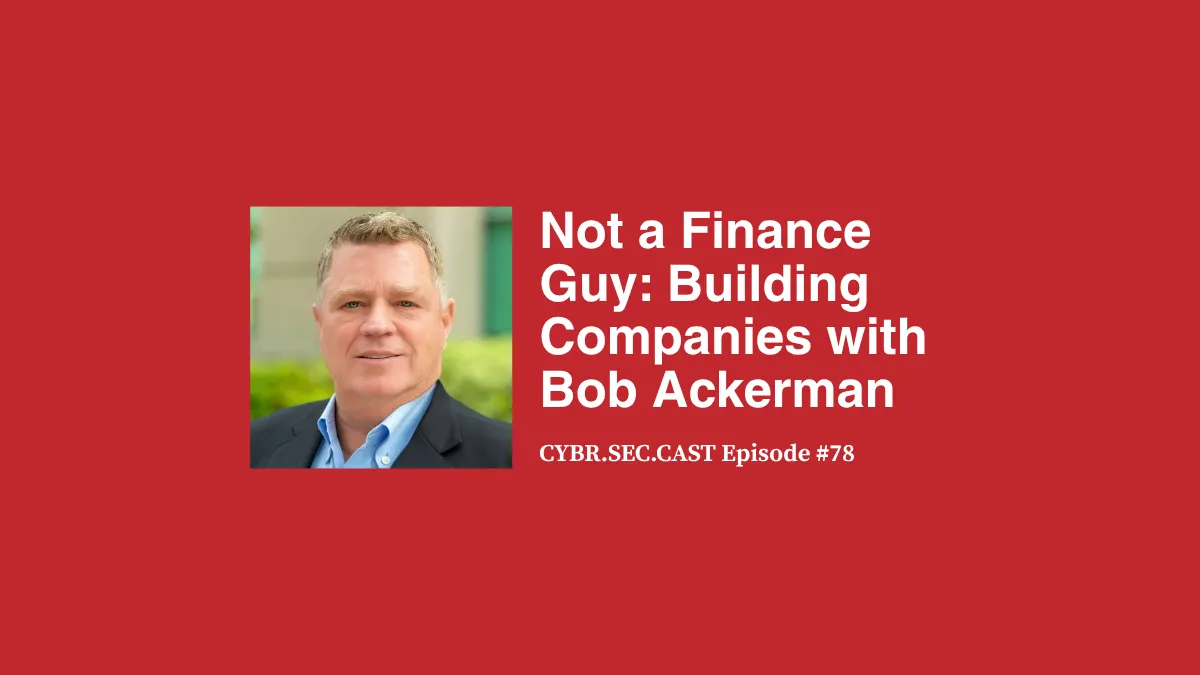
Bob Ackerman knows that firsthand. The managing director of DataTribe helped back Dragos when much of the venture capital community couldn't imagine a viable business built around protecting industrial control systems and critical infrastructure.
Today, he sees parallels between those early days and the investment frenzy surrounding artificial intelligence.
Speaking with Michael Farnum and Sam Van Ryder on CYBR.SEC.CAST, Ackerman described how conventional thinking can blind investors to emerging security threats — and how chasing the latest technology trend can be just as dangerous as ignoring the next big market. (Editor's note: Van Ryder is a Dragos employee.)
"If the herd was right, the herd would be rich," Ackerman said. "The herd is not rich."
Full episode and related article:
 , and CYBR.SEC.Media
 Bill Brenner
The cybersecurity market nobody believed existed
When Dragos co-founder Rob Lee began seeking investors, the response was overwhelmingly dismissive.
According to Ackerman, Lee held approximately 120 meetings with venture capitalists who questioned the industrial cybersecurity market, its customers and its commercial potential. Some suggested he abandon the idea entirely and pursue opportunities in more established technology sectors.
Then Lee met DataTribe.
By that point, Lee had grown so frustrated with venture capital that he arrived without a pitch deck. He simply explained what he wanted to build and why protecting industrial systems mattered.
Within an hour, Ackerman and his partners agreed to invest. DataTribe ultimately wrote Dragos its first $1 million check, launching a partnership that would span a decade.
The decision wasn't a leap of faith. Ackerman and his team had already identified industrial cybersecurity as an emerging opportunity by studying offensive cyber operations against critical infrastructure.
They had watched nation-state activity targeting industrial control systems, including Russian operations against Ukraine and Iranian activity involving Saudi infrastructure. Those attacks suggested that industrial environments were becoming strategic targets and that defensive technology would need to evolve accordingly.
"We want to be ahead of the market," Ackerman said. "We want to define categories. We want to be category creators and category leaders."
When venture capital becomes a herd
Ackerman argues that the venture capital industry frequently mistakes historical market conditions for permanent realities.
Industrial organizations had long been difficult customers for technology startups. Their purchasing cycles were complicated, their environments specialized and their willingness to adopt new technologies limited.
Many investors interpreted those characteristics as evidence that industrial cybersecurity could never become a substantial market.
DataTribe reached the opposite conclusion.
The growing threat to industrial infrastructure would eventually force organizations to rethink security investments, creating demand that traditional market analysis failed to anticipate.
Ackerman sometimes describes venture capitalists as "visionary sheep" — investors who claim to see the future but often follow the same assumptions as everyone else.
That tendency, he argues, has become more pronounced as venture capital has grown increasingly focused on financial transactions rather than building sustainable businesses.
For Ackerman, the best investments start with deep domain expertise, an understanding of emerging threats and founders capable of recognizing problems before the broader market catches up.
AI's gold rush could repeat venture capital's mistakes
That same herd mentality now concerns Ackerman as investors pour money into artificial intelligence.
He considers AI a genuinely transformative technology, but believes enthusiasm for its commercial potential has created an overcrowded market filled with companies offering little meaningful differentiation.
"I think that we overstate the near-term impact. We understate the long-term impact," Ackerman said. "And in the middle of that, there's a lot of fool's gold."
The concern is particularly relevant to cybersecurity, where startups increasingly compete to automate security operations, accelerate threat detection and introduce autonomous capabilities.
The investment surge is substantial. DataTribe's own research found that more than 83% of cybersecurity seed investment in the first quarter of 2025 went to companies incorporating AI into their products.
Ackerman isn't arguing against AI investment. He's questioning whether investors and entrepreneurs have the domain expertise to distinguish durable innovation from products designed primarily to capitalize on market excitement.
He also identifies trust as a critical obstacle to widespread AI adoption. Without confidence in how AI systems operate and make decisions, even technically impressive offerings may struggle to deliver lasting value.
Building cybersecurity companies that last
Ackerman's approach reflects his experience as both an entrepreneur and investor. He believes venture capital works best when investors bring operational knowledge, market expertise and a willingness to build businesses alongside founders.
That's the philosophy behind DataTribe, which works with entrepreneurs emerging from the national security and intelligence communities to turn specialized technical expertise into commercial cybersecurity companies.
Rather than chase fashionable technologies, Ackerman looks for founders who understand difficult problems, anticipate how threats will evolve and want to build sustainable businesses.
Dragos illustrates the potential payoff. The industrial cybersecurity company reached a $1.7 billion valuation in its 2021 Series D funding round, providing a powerful validation of a market that many early investors had dismissed.
For Ackerman, the lesson isn't that investors should automatically embrace unpopular ideas. It's that genuine expertise and independent thinking matter more than following market momentum.
"What I'm looking for, I'm looking for people with deep domain expertise that I can work with as a true partner," he said.
The next defining cybersecurity company may not be the startup attracting the loudest attention or the biggest wave of investment. It may be the one tackling a problem the rest of the market hasn't recognized yet.