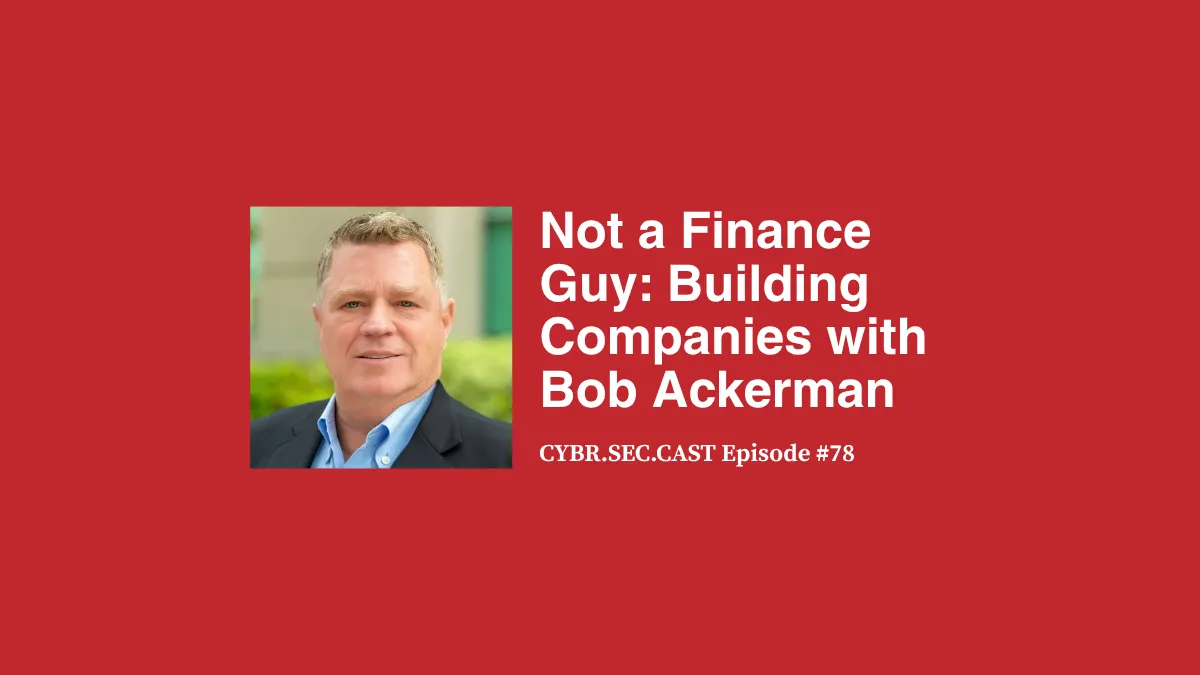
Cybersecurity startups spend enormous amounts of time developing technology, raising capital and convincing customers they can solve problems better than the competition. But according to veteran investor Bob Ackerman, the most important competitive advantage may have nothing to do with the product.
It's the culture.
Ackerman, managing director at DataTribe, has spent decades building and investing in technology companies, including an early investment in industrial cybersecurity pioneer Dragos. During a recent episode of CYBR.SEC.CAST with hosts Michael Farnum and Sam Van Ryder, he argued that the difference between a promising startup and an enduring company often comes down to leadership, shared purpose and the ability to keep people together when circumstances turn ugly.
"Culture is the unfair competitive advantage," Ackerman said. "Tech is really, really important, but through the ups and downs over 10 years, culture is what gets you through that."
Full episode and related article:
 , and CYBR.SEC.Media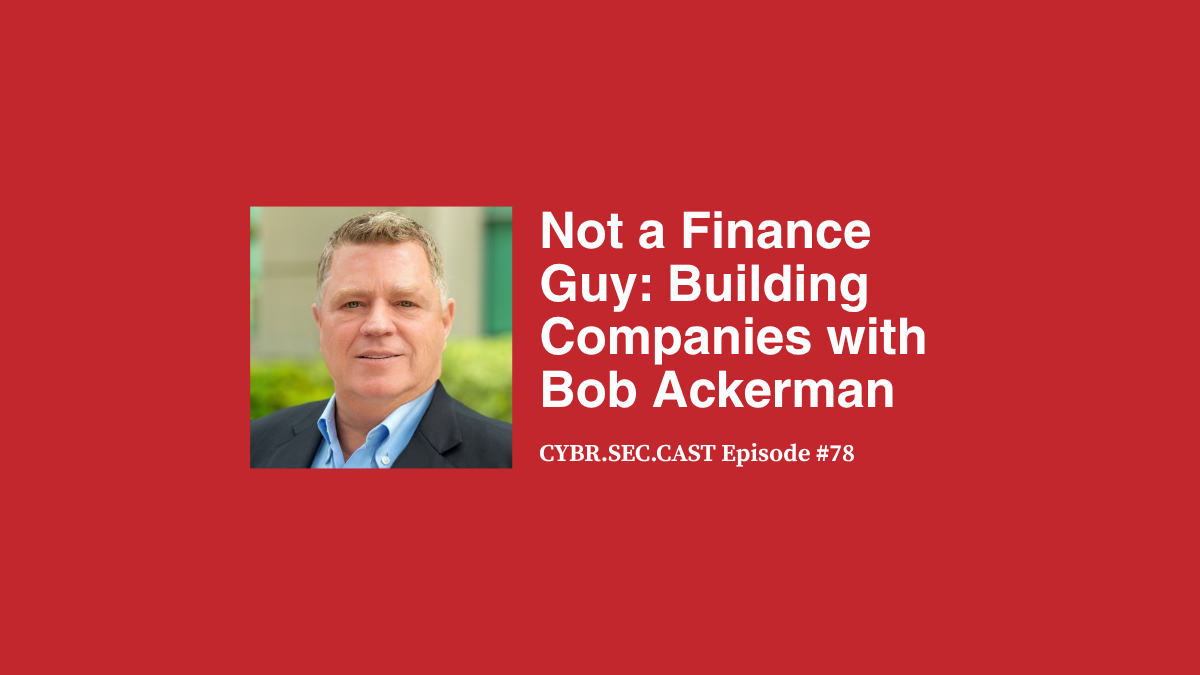
 Bill Brenner
Dragos built its culture around a mission
Ackerman points to Dragos co-founder Rob Lee as an example of a leader who understood that distinction from the beginning.
When DataTribe first invested in Dragos, industrial cybersecurity was still an emerging market. Investors questioned whether companies would spend meaningful money protecting operational technology and industrial control systems.
Lee saw something bigger than a commercial opportunity. He believed protecting critical infrastructure was essential to protecting society itself.
His guiding mission was simple: safeguarding civilization.
That purpose became the foundation of Dragos' culture, helping unite employees around work that extended beyond product development and financial performance.
"Rob mobilized and built that team around that North Star, safeguarding civilization," Ackerman said. "I've never seen a better job of building culture."
For Ackerman, the mission mattered because it gave employees a reason to stay committed through the uncertainty that inevitably accompanies building a business.
People who believe in the same objectives, trust one another and understand why their work matters are better equipped to navigate setbacks than teams assembled primarily around compensation or the prospect of a lucrative exit.
The COVID test: Cut costs or keep building?
That philosophy faced a serious test when the COVID-19 pandemic disrupted business operations and financial markets.
Like many startups, Dragos confronted uncertainty about customer spending, future investment and its ability to continue growing. Boards across the venture capital industry were urging portfolio companies to reduce expenses and preserve cash.
Dragos faced similar pressure. Ackerman recalled discussions about whether the company needed to reduce its workforce, something it had not previously experienced.
The leadership team ultimately made cuts, but not nearly as deeply as some other companies. One reason was that the cyber threats driving demand for Dragos' technology weren't disappearing.
Then Ackerman posed an unusual question to Lee: If he had another $2 million to invest, where would he put it?
Lee answered immediately: government. Ackerman supported the decision.
Rather than treating the crisis exclusively as an exercise in cutting costs, the company identified an opportunity to strengthen its position in a market where its expertise remained valuable.
For Ackerman, the episode demonstrated why experienced operators and strong leadership matter.
Business decisions cannot be reduced to spreadsheets. They require understanding customers, markets, threats and the people responsible for executing a company's strategy.
Has venture capital lost its way?
Ackerman believes the broader venture capital industry has drifted away from some of those principles.
Early in his career, many of the investors he encountered were former operators who had built businesses themselves. They understood the difficulties of managing employees, developing products and surviving market downturns.
As more capital entered the industry, he argues, investing became increasingly transactional.
The emphasis shifted toward financial outcomes, rapid growth and quick exits rather than building companies designed to endure.
He sees a similar problem in parts of Silicon Valley's culture, where employees may jump between companies for better compensation and founders face pressure to deliver financial returns on compressed timelines.
Ackerman favors a different approach: identify talented people with deep technical expertise, help them develop into business leaders and build organizations capable of sustaining their missions over time.
That philosophy also shapes DataTribe's work with entrepreneurs emerging from the national security and intelligence communities. Ackerman believes many bring a strong sense of mission and teamwork developed through years of protecting systems and confronting adversaries.
Those qualities, combined with commercial expertise, can form the foundation of enduring cybersecurity companies.
Building something that lasts
Ackerman's relationship with Dragos illustrates the distinction between building a company and simply financing one.
After a decade working alongside Lee and his team, Ackerman is no longer a Dragos board member or shareholder. The investment produced a strong financial outcome, but he considers the relationships and shared accomplishments equally important.
If Lee called tomorrow asking for help, Ackerman said, he would drop everything.
That loyalty reflects the kind of culture he believes founders should strive to create: one where people remain invested in each other's success long after their formal business relationships end.
For cybersecurity entrepreneurs navigating fierce competition, uncertain funding and relentless technological change, Ackerman's message is clear.
Great technology can help launch a company. Capital can accelerate its growth. But leadership, trust and shared purpose determine whether the people building that company can stay together long enough to achieve something lasting.