
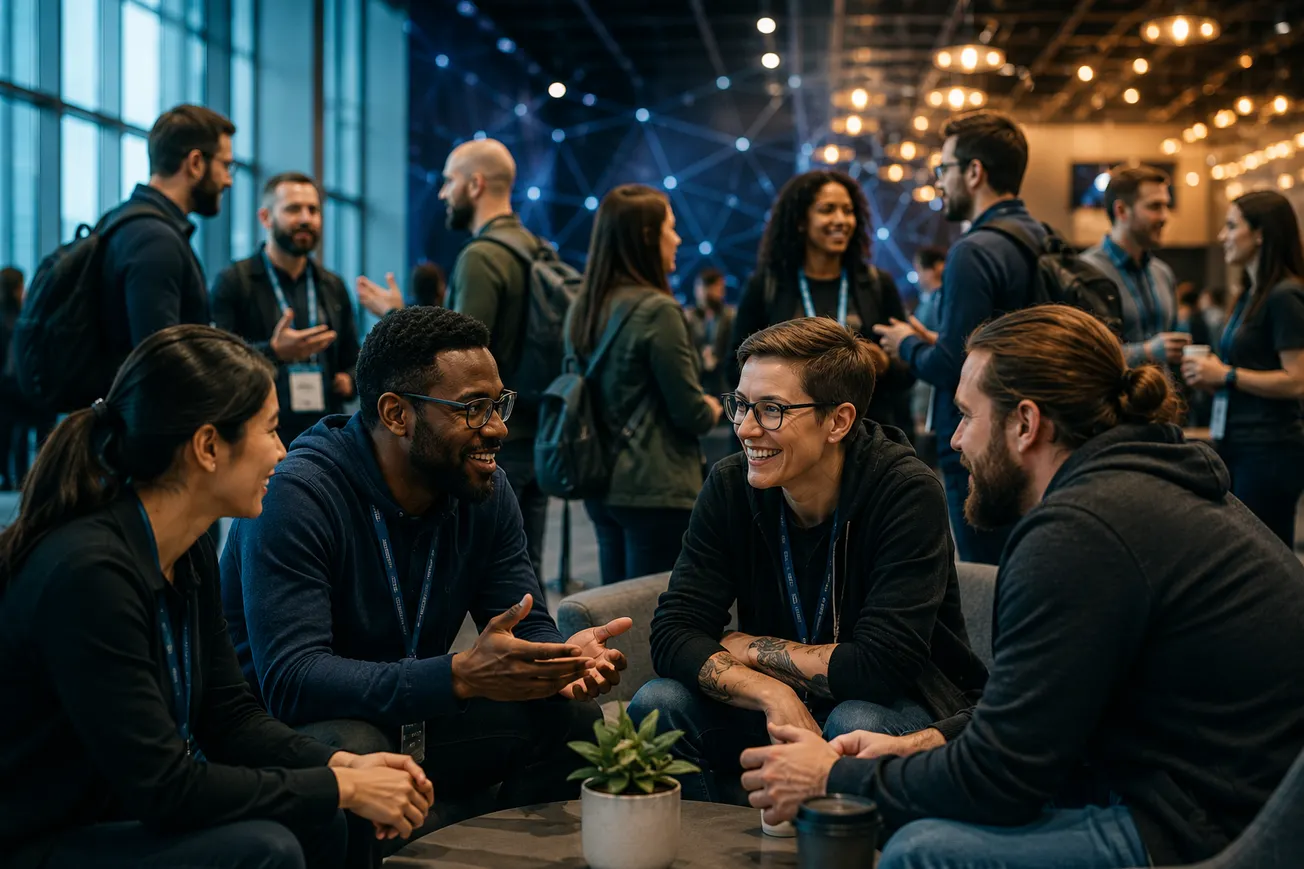
This article is based on the latest episode of CYBR.SEC.CAST. Full episode and related article here:
 , and CYBR.SEC.Media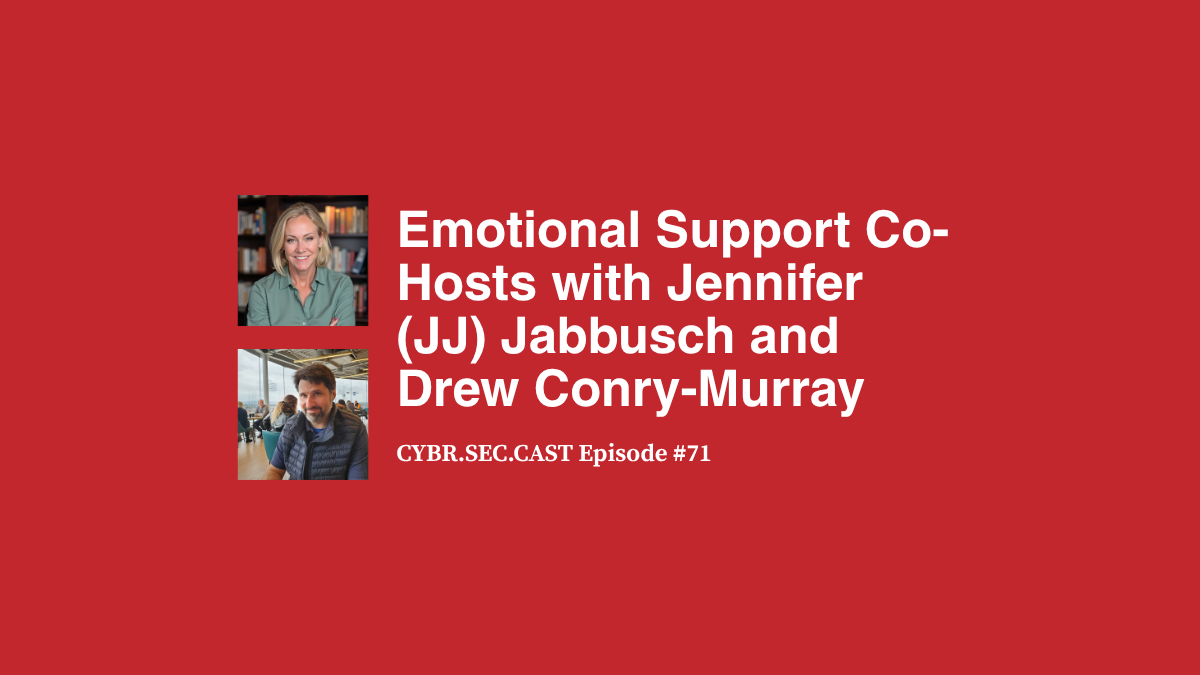
 Bill Brenner
Cybersecurity has never suffered from a lack of information.
Every day brings new threat reports, research papers, podcasts, webinars, conference talks, certifications, and AI-generated explainers. There is more security knowledge available today than at any point in the industry's history.
Yet knowledge alone doesn't build practitioners. Community does.
That theme surfaced repeatedly when Packet Protector hosts Drew Conry-Murray and Jennifer "JJ" Jabbusch joined Michael and Sam on the latest episode of CYBR.SEC.CAST. While the conversation touched on networking, security, conferences, and podcasting, it kept returning to a simple idea: cybersecurity grows when experienced professionals invest in the people coming behind them.
The next generation brings new energy
Jabbusch has spent more than three decades in technology, but one of the moments she spoke about most enthusiastically wasn't a major breach or emerging technology.
It was a conversation with a young network engineer.
Earlier that day, she had spent time mentoring a woman in her twenties who wanted advice about transitioning from networking into cybersecurity. The engineer repeatedly apologized for taking up her time.
Jabbusch's response was exactly the opposite. Those conversations energize her. Watching people enter the industry with curiosity, fresh ideas, and a willingness to learn reminds her why she continues to stay involved. After years in the profession, she said, experienced practitioners often need that new perspective just as much as newcomers need guidance. It's a reminder that mentorship isn't a one-way transaction.
Both sides benefit.
Conferences matter because of the conversations
That same philosophy has shaped CYBR.SEC.CON.
Michael and Sam explained that one of the event's primary goals isn't simply delivering technical presentations.
It's recreating something many long-time practitioners feel has been lost at some of the industry's largest conferences.
Years ago, security professionals knew exactly where to find friends, mentors, researchers, and respected practitioners. The value wasn't confined to keynote stages or vendor booths.
It was found in hallway conversations. Chance encounters. Late-night discussions. The feeling that everyone belonged to the same community.
As the conference has grown from a regional Houston event into one that attracts attendees from across the United States, maintaining that sense of community has remained one of its defining priorities.
Rather than competing with the industry's biggest conferences, the goal is to create an environment where learning and relationships take priority over spectacle.
Accessibility is part of security
The discussion also touched on a practical issue that often receives less attention than it deserves.
Professional development costs money. Large conferences can be prohibitively expensive. Training budgets are shrinking. Many practitioners pay for certifications, travel, and education out of their own pockets.
That's one reason Michael and Sam have deliberately focused on keeping CYBR.SEC.CON accessible, making it possible for students, career changers, and practitioners from smaller organizations to participate without the financial barriers associated with some larger events.
Community isn't simply about bringing people together.
It's about making sure they can afford to be there.
Packet Protector was built to educate practitioners
Conry-Murray described a remarkably similar philosophy behind Packet Pushers and the Packet Protector podcast.
The network began as two networking professionals discussing technology for other practitioners.
Over time, it expanded into multiple podcasts, but the mission stayed consistent.
Help technical professionals understand new technologies.
Support career development. Build community.
Create opportunities for experts and learners to engage with one another. That philosophy extends beyond podcast episodes.
Packet Pushers maintains an active Slack community where listeners suggest topics, ask questions, challenge assumptions, and help shape future discussions. Several recent episodes originated directly from audience requests.
Instead of treating listeners as consumers, the community becomes part of the editorial process.
The future belongs to people who keep learning
One of the most interesting parts of the discussion was how little anyone talked about certifications.
Not because certifications lack value, but because curiosity mattered more.
Packet Protector covers everything from networking fundamentals and cloud security to AI agents, machine identities, and emerging technologies because both hosts see continuous learning as part of the profession—not something reserved for newcomers.
The industry's most successful practitioners rarely stop learning. They simply change how they learn. Sometimes that's through formal education.
Sometimes it's through podcasts. Sometimes it's through conversations with peers. Often it's through all three.
Community remains cybersecurity's competitive advantage
Cybersecurity is becoming increasingly automated. AI can summarize research. Threat intelligence platforms can correlate indicators. Security tools can surface vulnerabilities faster than ever before.
What they still can't replace is the willingness of experienced practitioners to answer questions, mentor newcomers, share hard-earned lessons, and create spaces where professionals learn from one another.
That was the common thread running through the conversation with Conry-Murray and Jabbusch.
Technology changes constantly. Community is what helps people keep up.
And as cybersecurity continues to evolve, that may be the industry's most valuable resource of all.


