
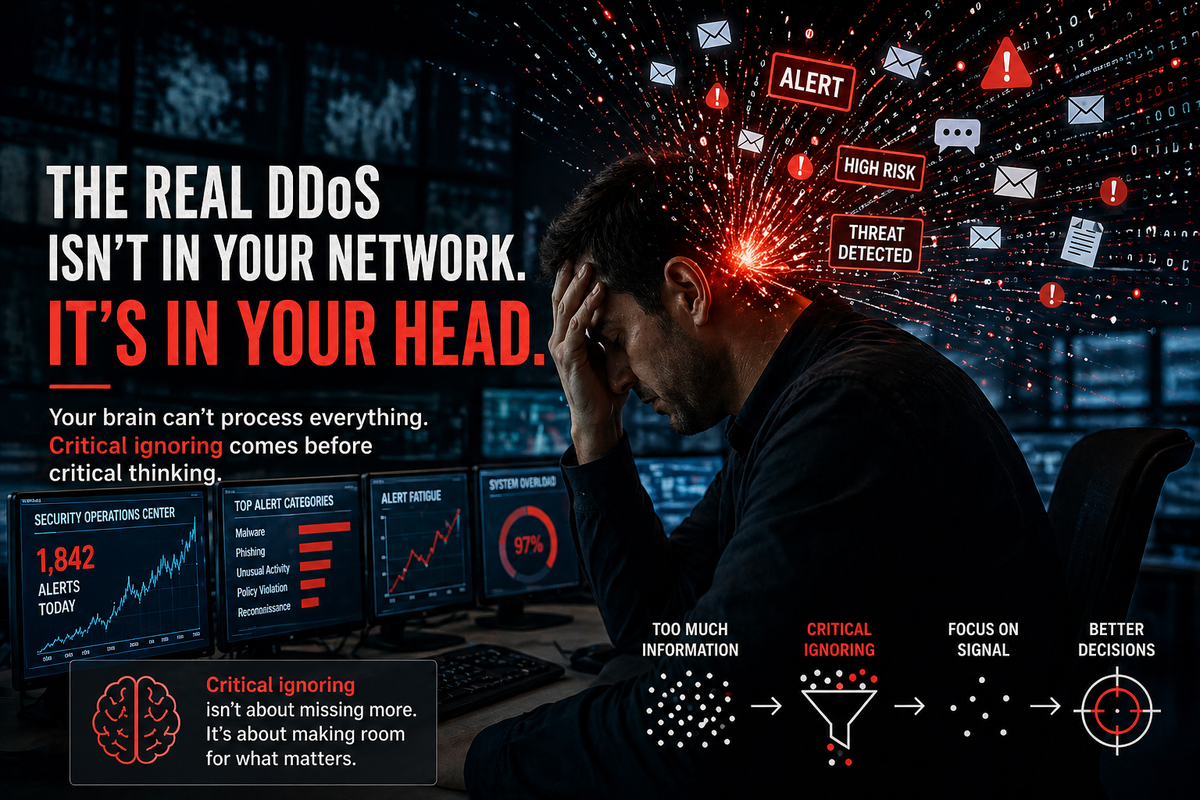
We've covered Cybersecurity's mental health problem frequently in recent months, specifically the root causes – cyber defenders running hot for too long: endless alerts, nonstop context switching, staffing shortages, layoffs, hostile online environments, breach fatigue, AI anxiety, and the growing expectation that security teams should somehow absorb all of it without breaking.
That’s part of why Mental Health Awareness Month matters in cybersecurity specifically. Not because defenders need another inspirational slogan, but because the industry needs more places where people can speak honestly about what this work does to them and where they can find support designed for the realities of security work.
Last week, I highlighted Mental Health Hackers, a nonprofit that has spent years creating community, peer support, and open conversations around mental health in cybersecurity. Their work continues to matter because they helped normalize discussions that the industry avoided for far too long.
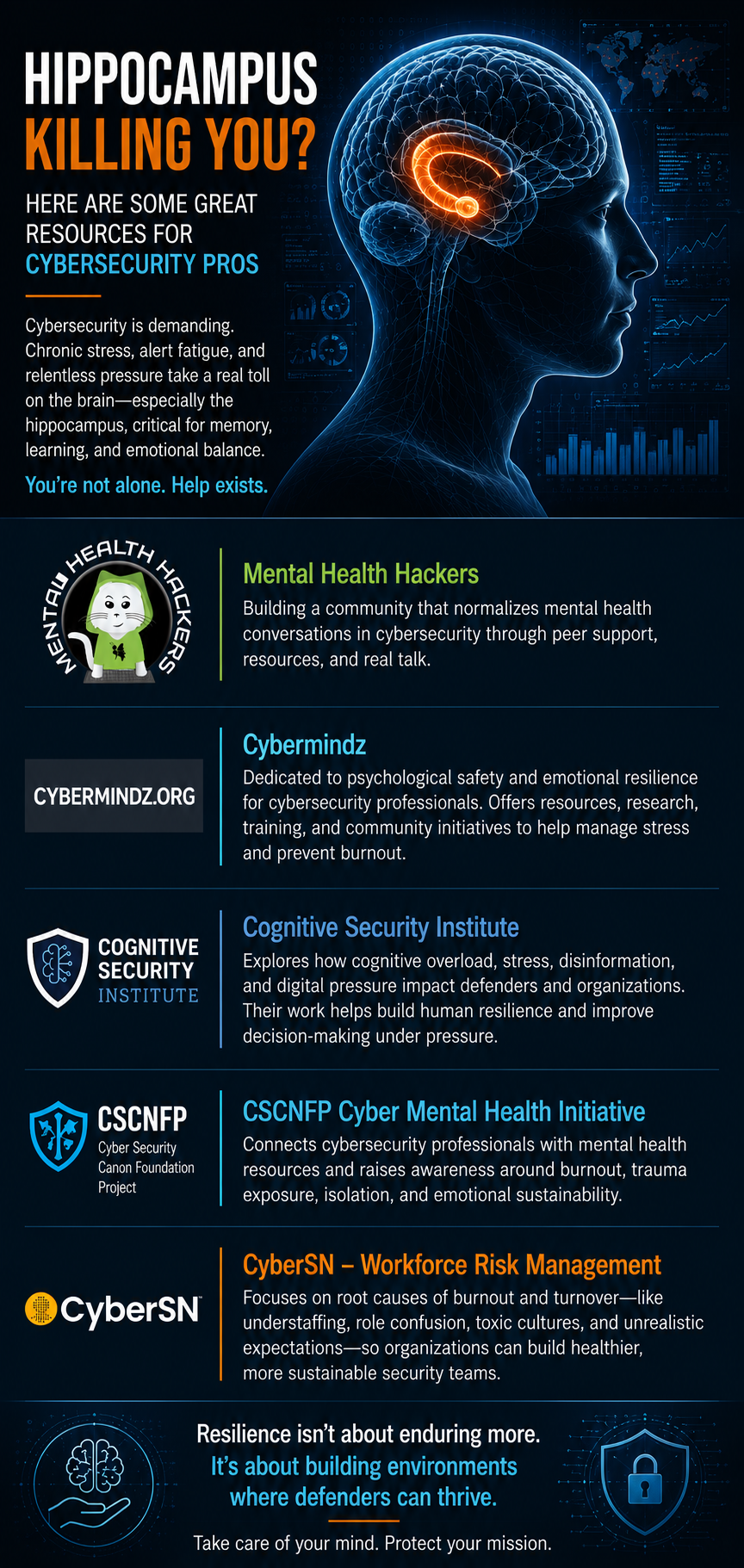
Here are several other organizations and initiatives security professionals should know about:
Cybermindz
Cybermindz focuses on psychological safety, emotional resilience, and mental health support specifically tailored to cybersecurity professionals. The organization approaches the issue as both a human and industry sustainability problem, offering resources, research, training, and community-focused initiatives designed to help security teams manage chronic stress before it turns into burnout or crisis.
What stands out about Cybermindz is its emphasis on making mental health support operationally relevant to the realities of cyber work rather than treating it as an abstract wellness exercise.
Related resource:
 Bill Brenner
Cognitive Security Institute
Cognitive Security Institute examines the intersection of cognition, human performance, information overload, manipulation, and security. Their work explores how constant digital pressure, disinformation, stress, and cognitive fatigue affect defenders and organizations alike.
This matters because cybersecurity failures are not always technical failures. Sometimes they are human processing failures caused by overload, distraction, exhaustion, or degraded decision-making under pressure.
Their work pushes the industry to think more seriously about protecting the human systems behind the technology.
Related resources:
Bill Brenner Bill Brenner
 , and CYBR.SEC.Media
 Bill Brenner
CSCNFP Cyber Mental Health Initiative
The Cyber Security Canon Foundation Project launched its Cyber Mental Health Initiative to help connect cybersecurity professionals with mental health resources, awareness efforts, and community support.
The initiative recognizes something many defenders already know firsthand: cybersecurity stress is not theoretical. It affects careers, families, relationships, and long-term health outcomes. The project helps elevate conversations around burnout, trauma exposure, isolation, and emotional sustainability inside the profession.
CyberSN Workforce Risk Management
CyberSN approaches the problem from another critical angle: workforce risk.
Instead of focusing solely on recovery after burnout occurs, their workforce risk management work looks at some of the underlying structural drivers hurting security teams in the first place: understaffing, role confusion, hiring dysfunction, unrealistic expectations, toxic work environments, and operational instability.
Related resource:
Bill BrennerBill Brenner