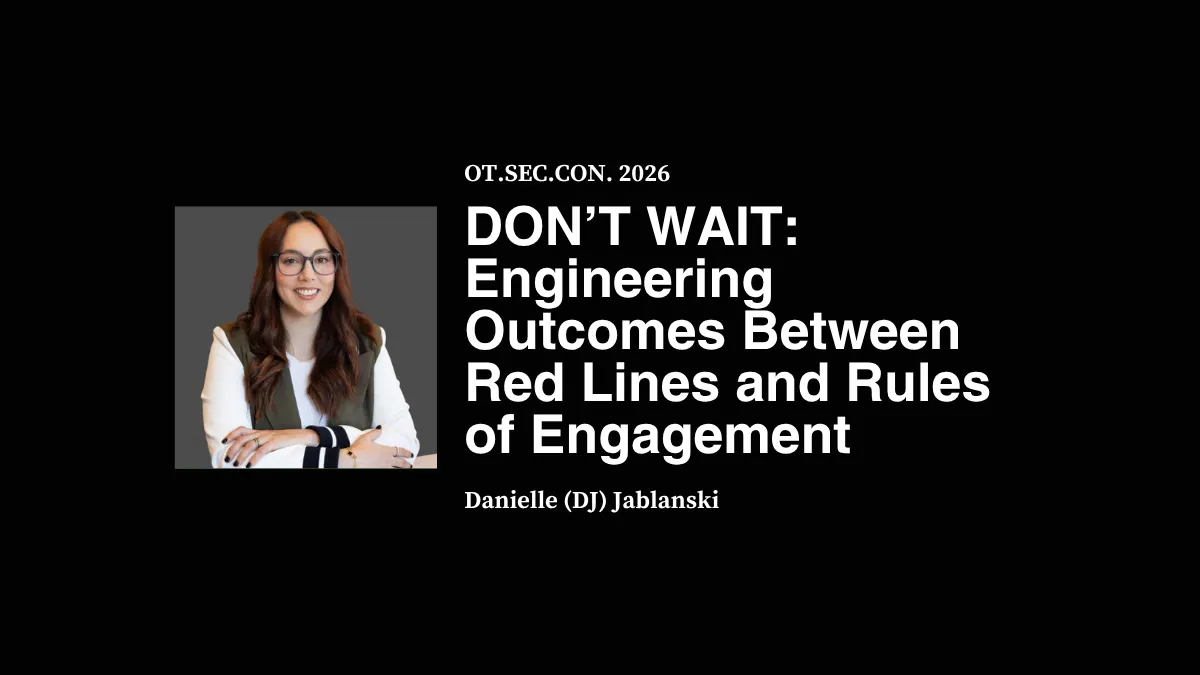
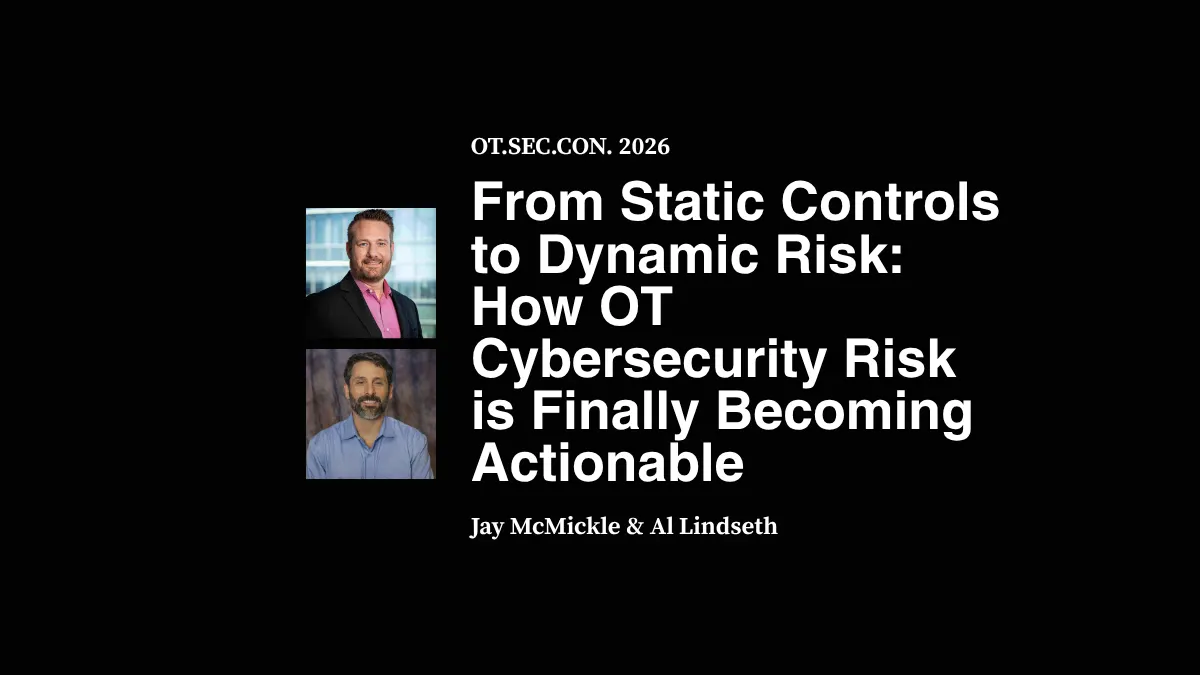
Presenters:
This talk argues that OT security programs fail because they try to scale complexity instead of reducing it. As environments grow, organizations pile on tools and processes—making systems harder to secure rather than easier.
Key takeaways
- Complexity is the enemy
- More systems, more integrations, more edge cases
- Every added layer creates new attack paths
- Security becomes harder to manage, not easier
- Scaling security the wrong way
- Organizations respond to risk by adding tools
- Each tool adds alerts, configs, and dependencies
- The result is more noise, more fragility, less clarity
- Environments drift over time
- What started as a clean design becomes messy
- Exceptions, workarounds, and quick fixes accumulate
- Security posture degrades without anyone noticing
- Simplicity enables security
- Fewer pathways = fewer attack opportunities
- Clear architectures are easier to monitor and defend
- Reducing complexity improves both visibility and response
- You have to design for manageability
- Security isn’t just about controls
- It’s about whether humans can realistically operate the system
- If it’s too complex to understand, it’s too complex to secure