
Introduction
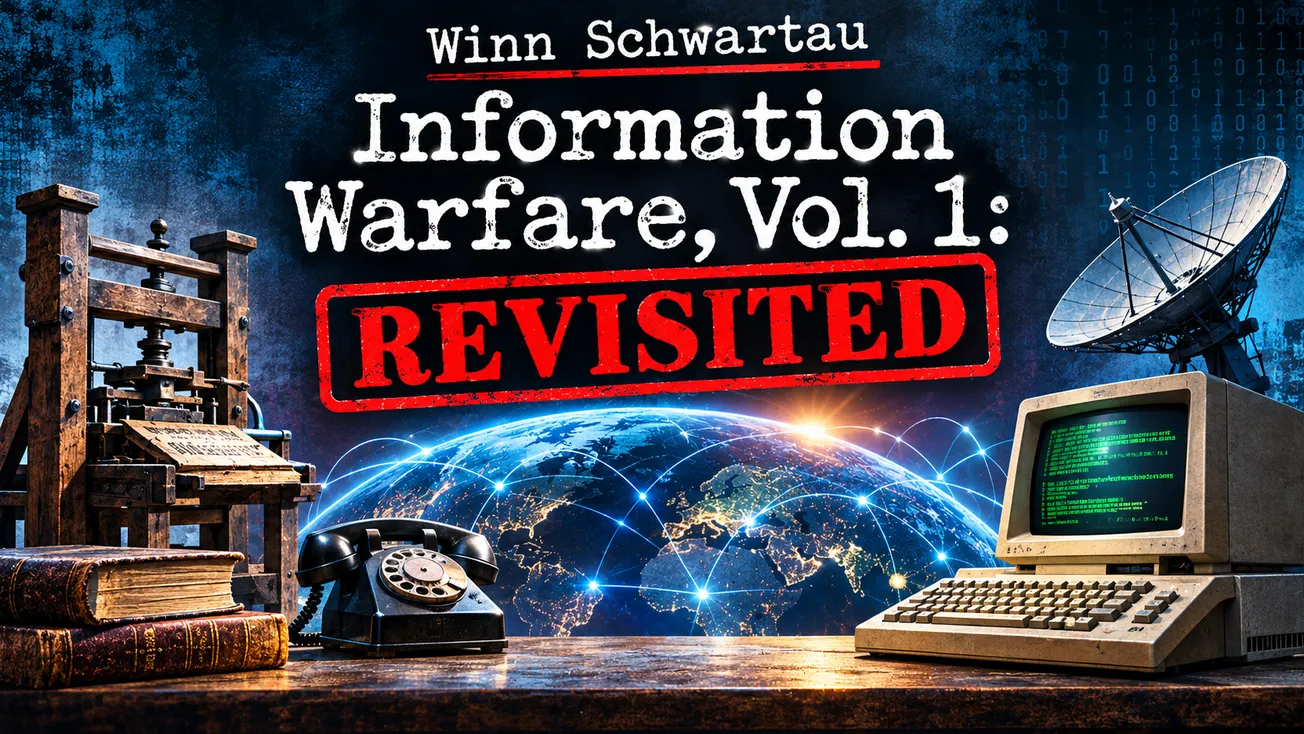
This is the third installment of Information Warfare, Vol. 1: REVISITED. After exploring distrust and digital addiction, Winn Schwartau turns to another vulnerability: an abundance of information that exceeds our ability to assess it.
Drowning in information
Cyberspace, like the earth itself, is becoming polluted. Too much information is filling it, and our brains are too small to sort through it all. That is the warning Schwartau draws from Joel Kurtzman as he considers the limits of networks and human attention.
We push systems harder than they were designed to operate. We demand more capacity, more speed and more choices. Technical overload is one problem. The human overload that accompanies it is another.
A thousand choices and no clear answer
With hundreds of television channels, how do we decide what to watch? With tens of thousands of sources of information available through the Global Network, how do we decide what is valuable?
An abundance of choices sounds like freedom. But freedom to choose is not the same as the ability to make an informed choice. We can consume a steady diet of entertainment, infomercials and headlines while neglecting the information that would help us understand the world.
The risk is not simply that we know too little. It is that we are inundated with material and lose the ability, or the patience, to distinguish what matters.
Who filters the world for us?
The media increasingly serve as the filter through which we view events and make judgments. Reporters and editors are human. Their assumptions, interests and beliefs inevitably shape what reaches us.
Schwartau warns especially against consuming only what we already believe. When world-shaping events are compressed into a few minutes of television or a sensational headline, essential context disappears. Opposing views, crucial facts and the time needed for reflection are lost.
Print journalism can provide greater depth, but it too has editorial perspectives. No one person can read every major newspaper and every competing account. Yet citizens and businesses need ever more information simply to keep up.
Information is not understanding
The problem is a trap: we need information to make decisions, but we have more information than we can evaluate. The channels that promise to help us understand the world can also narrow our view of it.
For the Information Warrior, that is an opening. A society overwhelmed by competing messages and dependent on intermediaries to decide what matters is vulnerable to distorted narratives.
The challenge is not merely to acquire more information. It is to preserve the judgment necessary to question it.
Next in the series
Part 4 closes the series with Schwartau’s warning about artificial intelligence: what happens when computers begin deciding which other computers, sources and messages deserve our trust?