
CYBR.SEC.CON 2026 brought cybersecurity executives, hackers, researchers and students together in Houston for two days of technical education, networking and community building. For CYBR.HAK.CAST hosts Michael Farnum and Phillip Wylie, the event also demonstrated how artificial intelligence is changing offensive security and why bringing practitioners and security leaders together matters more than ever.
In a post-conference episode, they reflected on the conference's technical sessions, its growing hacker community and the return of BSides Houston, which took place the following day.
Latest Episode:
 , and CYBR.SEC.Media
Full coverage of CYBR.SEC.CON. 2026 and Houston BSides:
 Bill Brenner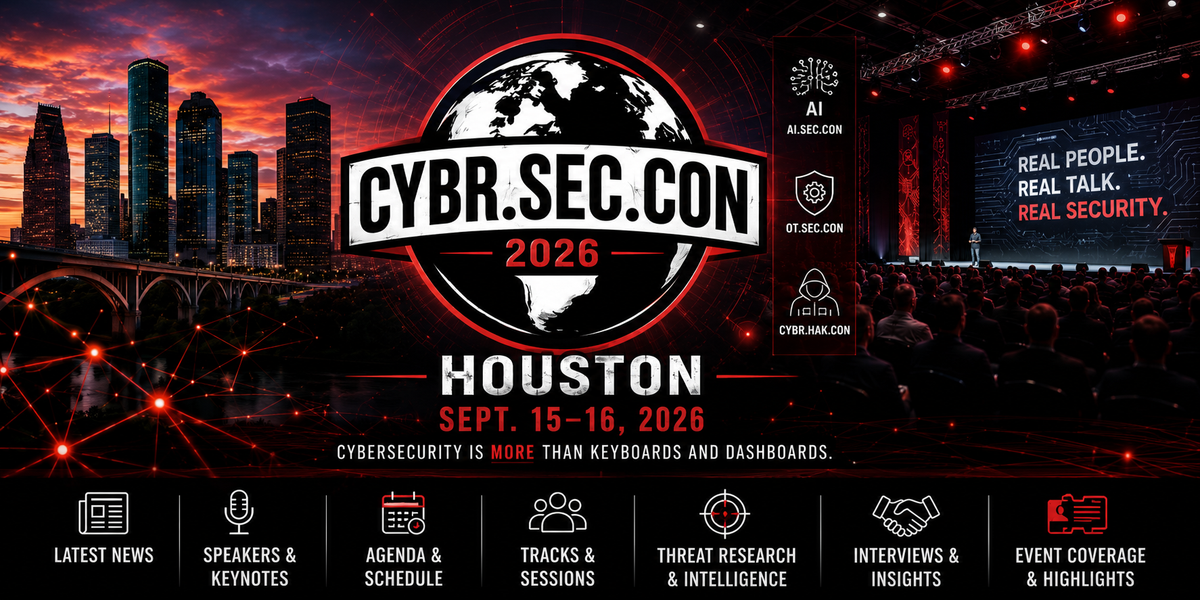
AI is changing the capture-the-flag game
One of the conference's technical highlights was the CYBR.HAK.CON track, which brought hands-on hacking content from the standalone CYBR.HAK.CON event into the larger CYBR.SEC.CON program.
The track included a presentation by Jacob Krell examining how AI is changing capture-the-flag (CTF) competitions. Wylie noted that AI-assisted participants are completing challenges faster, raising questions about how competitions should evolve.
Farnum pointed to an experiment at the earlier CYBR.HAK.CON event, where a CTF designer introduced false flags intended to mislead AI systems. The experiment demonstrated how experienced human hackers and AI systems can approach the same challenge differently.
The discussion also underscored the importance of incorporating AI into practical security training rather than excluding it from competitions.
Bringing IT, OT and offensive security together
The CYBR.HAK.CON track also featured industrial control system security, including Andrew Dettmer's presentation on an ICS forensic toolkit.
Farnum said exposing traditional penetration testers to operational technology environments is increasingly important as attacks against critical infrastructure continue to draw attention.
The conference's broader program included dedicated tracks for operational technology, AI security and executive leadership, allowing attendees to explore disciplines beyond their primary areas of expertise.
Honoring the people who built the community
Beyond the technical sessions, CYBR.SEC.CON celebrated its community's history. The conference's hacker village featured an old-school bulletin board system built by village organizer Dead, and the larger Grayson's Village honored Farnum's late son.
The conversation also turned to accessibility. Wylie praised CYBR.SEC.CON for welcoming students and aspiring professionals alongside experienced security practitioners.
Farnum emphasized that students deserve opportunities to learn and connect with the industry, regardless of their purchasing power. "We're not going to keep people from coming in just because they don't have a P.O. ready," he said.
BSides Houston strengthens the community
Both hosts also praised the return of BSides Houston, held at the Houston Food Bank following CYBR.SEC.CON.
The event brought together local practitioners, visiting security professionals and newcomers eager to establish industry connections.
Farnum expressed hope that the two conferences could continue operating during the same week, creating several days of cybersecurity education and networking in Houston.
For Wylie, the experience reinforced the value of attending conferences beyond one's home region.
"I would encourage anyone to get outside your region where you're located and get out to other communities," he said.